Skip to main content Skip to main navigation
heart-solid My Visit Donate
Home Smithsonian Institution IK development site for ODI
Press Enter to activate a submenu, down arrow to access the items and Escape to close the submenu.
    • Overview
    • Museums and Zoo
    • Entry and Guidelines
    • Museum Maps
    • Dine and Shop
    • Accessibility
    • Visiting with Kids
    • Group Visits
    • Overview
    • Exhibitions
    • Online Events
    • All Events
    • IMAX & Planetarium
    • Overview
    • Topics
    • Collections
    • Research Resources
    • Stories
    • Podcasts
    • Overview
    • For Caregivers
    • For Educators
    • For Students
    • For Academics
    • For Lifelong Learners
    • Overview
    • Become a Member
    • Renew Membership
    • Make a Gift
    • Volunteer
    • Overview
    • Our Organization
    • Our Leadership
    • Reports and Plans
    • Newsdesk
heart-solid My Visit Donate

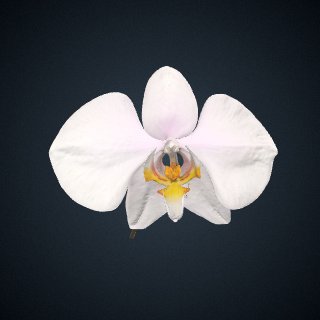
Phalaenopsis amabilis: Bloom

This media is in the public domain (free of copyright restrictions). You can copy, modify, and distribute this work without contacting the Smithsonian. For more information, visit the Smithsonian's Open Access page.
We also suggest that users: <ul> <li>Give attribution to the Smithsonian.</li> <li>Contribute back any modifications or improvements.</li> <li>Do not mislead others or misrepresent the datasets or its sources. </li> <li>Be responsible.</li> </ul>
International media Interoperability Framework
IIIF provides researchers rich metadata and media viewing options for comparison of works across cultural heritage collections. Visit the IIIF page to learn more.
View manifest View in Mirador Viewer
  • 3d model of Phalaenopsis amabilis: Bloom
    3D Model
  • Photographed by: Hannele Lahti
  • Photographed by: Hannele Lahti
  • Photographed by: Hannele Lahti

    Object Details

    Description

    This medium sized orchid was one of the few tropical Asian orchids known to Linnaeus. He initially placed it in the genus Epidendrum, simply because it also grew on trees.

    Bloom Time (Northern Hemisphere)

    December to June; peaks from January to March

    Ethnobotanical Uses

    This is one of the 3 national flowers of Inonesia.

    Pollination Syndrome

    Bee (Xylocopa), nectar deception

    Provenance

    From a cultivated plant not of known wild origin

    Accession Number

    2019-0352A

    Restrictions & Rights

    CC0

    Life Form

    Epiphytic

    Bloom Characteristics

    Inflorescence is 20-36" (51-89 cm) long and branching, with around 15 white, long-lasting flowers per a branch. Flowers are 4" (10 cm) across and can last up to 6 months.

    Fragrance

    Fragrant

    Plant Size

    3-5" x 8-15" (8-13 x 20-38 cm), excluding inflorescence

    Range

    Malesia to Papuasia

    Habitat

    Rainforests overhanging water; 0-1970ft (0-600m)

    See more items in

    Smithsonian Gardens Orchid Collection

    Common Name

    The Lovely Phalaenopsis
    Moon Orchid
    White Moth Orchid

    Group

    [vascular plants]

    Class

    Equisetopsida

    Subclass

    Magnoliidae

    Superorder

    Lilianae

    Order

    Asparagales

    Family

    Orchidaceae

    Subfamily

    Epidendroideae

    Genus

    Phalaenopsis

    Species

    amabilis

    Data Source

    Smithsonian Gardens

    Topic

    Orchids
    Living Collections

    Metadata Usage

    CC0

    Link to Original Record

    http://n2t.net/ark:/65665/ax77828fd1c-30ae-400a-9a12-ecff47959dc0

    Record ID

    ofeo-sg_2019-0352A

    Discover More

    collage of 4 orchid plants on pastel colored backgrounds

    The Future of Orchids: Conservation and Collaboration

    yellow orchid

    The Art and Science of Orchids

    arrow-up Back to top
    Home
    • Facebook facebook
    • Instagram instagram
    • LinkedIn linkedin
    • YouTube youtube

    • Contact Us
    • Get Involved
    • Shop Online
    • Job Opportunities
    • Equal Opportunity
    • Inspector General
    • Records Requests
    • Accessibility
    • Host Your Event
    • Press Room
    • Privacy
    • Terms of Use