
Smallest Herbivores Create the Biggest Impact for Grassland Forage
Prairie Dogs and Grasshoppers Do More Than Their Larger Herbivore Counterparts To Keep Soil and Plant Nutrients Cycling
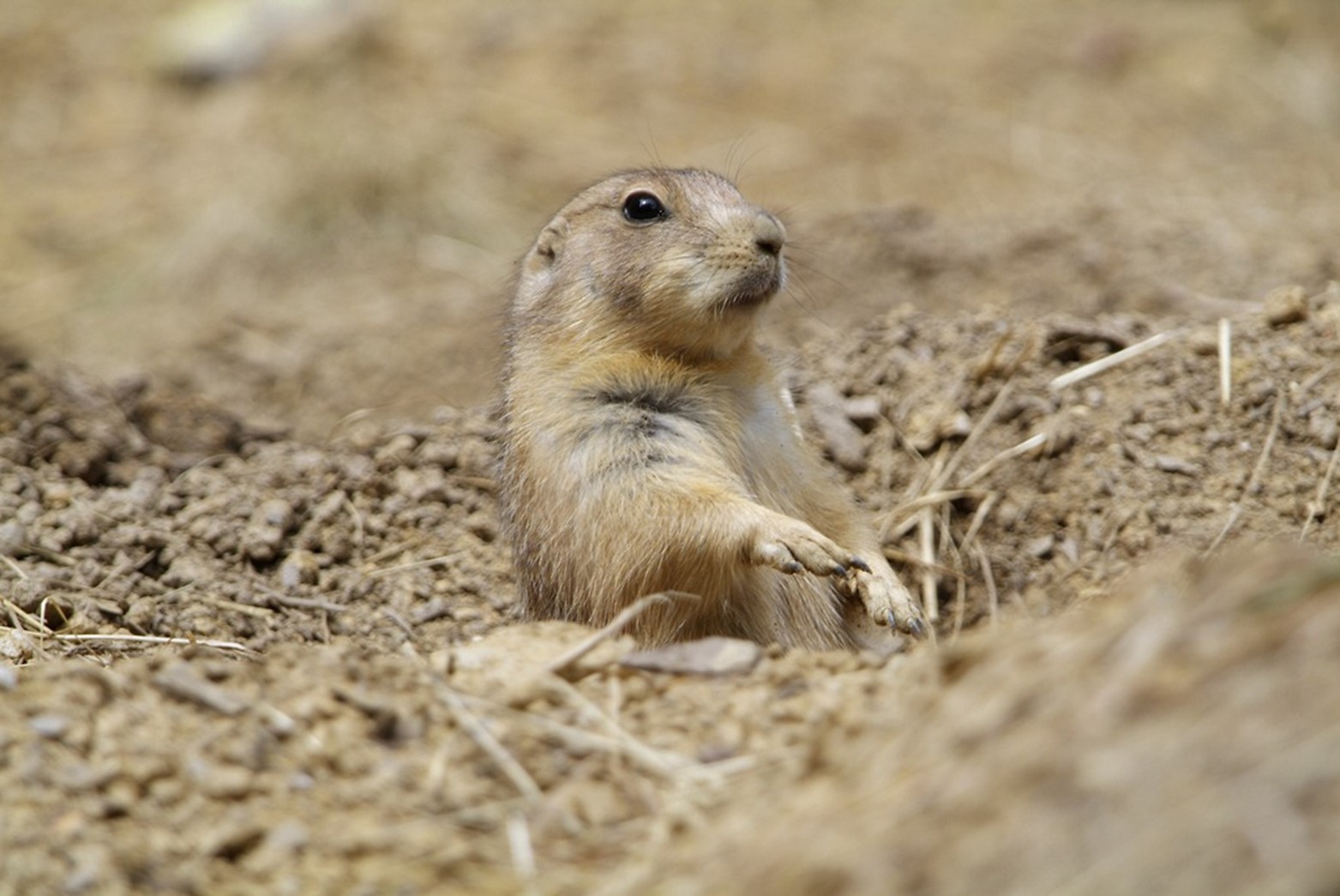
New research shows prairie dogs play an outsized role in nutrient cycling, adding to their list of beneficial services as ecosystem engineers. Ann Batdorf, Smithsonian’s National Zoo and Conservation Biology Institute
Media Contact
Ellie Tahmaseb
Benjamin Marcus
Photos and b-roll are available in the Zoo’s newsroom.
Soil nutrients support plants, and the animals who consume plants return these nutrients to the soil, creating a nutrient cycle. In a new study published in Ecology, scientists from the Smithsonian’s National Zoo and Conservation Biology Institute (NZCBI) found that in prairie grasslands, the smallest herbivores—namely prairie dogs and grasshoppers—increase rates of nutrient cycling to a greater degree than larger herbivores such as bison and cattle.
Grasslands cover 25–40% of the land on Earth and provide many benefits to the environment, including sequestering carbon, controlling erosion and hosting a diversity of life. Yet grasslands are some of the most threated terrestrial ecosystems, and herbivores, which play critical roles in nutrient cycling in grassland ecosystems, face many conservation challenges. In North America, bison and prairie dogs likely number only 1–2% of the populations of animals that roamed the Great Plains prior to European arrival. In the interest of identifying how these herbivores shape grassland ecosystems, researchers examined the contributions of prairie dogs, grasshoppers, bison and cattle on grass and soil nutrition across 15 shortgrass prairie sites in northeast Montana, an area of active research representing a collage of conservation, ranching and agricultural landscapes.
“Herbivores contribute to the green food web by turning plant tissues into urine and dung that provide new plant growth with readily available nutrients,” said Ellen Welti, NZCBI community ecologist and the study’s senior author. “This cycles nutrients at a faster rate than the brown food web, where plant tissues slowly senesce and degrade before nutrients become available for uptake by future plants.”
Of all the herbivores studied, researchers found prairie dogs contributed the greatest benefit to nutrient availability on the prairie. Prairie dog towns had the greatest levels of carbon and nitrogen in the soil, concentrations that increased with a greater presence of the smallest of the studied herbivores—grasshoppers. The prairie dogs also increased local nitrogen, potassium and magnesium in grass tissue, likely through their excretions and by burrowing, which helped incorporate the nutrients into the soil. In addition, grasshoppers increased phosphorus in the soil.
The researchers also found grasshoppers are likely responsible for the characteristic peak in plant biomass during midsummer on the prairie, before it drops off in the late growing season. The seasonal life cycles of grasshoppers, with small nymphs hatching in the spring growing to large hungry adults in the late summer and fall, are likely what causes these declines in plant biomass at the end of the growing season. In contrast to grasshoppers, the large herbivores studied, cattle and bison, consumed relatively constant levels of plant biomass across the summer.
“This study shows there are many different interactions occurring between herbivores and the greater grassland ecosystem,” said Julie Rebh, the study’s lead author who conducted the research as an intern at NZCBI. “While the presence of some smaller herbivores such as prairie dogs and grasshoppers may not be as obvious, the impact they have on grassland ecology is considerable.”
The study points to the need to conserve and restore not only the larger grazers to maintain nutrient cycling and fully functioning grassland ecosystems, but also the small, unsung heroes of the grasslands like prairie dogs and grasshoppers.
Smithsonian’s National Zoo and Conservation Biology Institute (NZCBI)
NZCBI leads the Smithsonian’s global effort to save species, better understand ecosystems and train future generations of conservationists. Its two campuses are home to more than 2,200 animals, including some of the world’s most critically endangered species. Always free of charge, the Zoo’s 163-acre park in the heart of Washington, D.C., features animals representing 400 species and is a popular destination for children and families. At the Conservation Biology Institute’s 3,200-acre campus in Virginia, breeding and veterinary research on nearly 250 animals representing 20 species provide critical data for the management of animals in human care and valuable insights for conservation of wild populations. NZCBI’s 305 staff and scientists work in Washington, D.C., Virginia and with partners at field sites across the United States and in more than 30 countries to save wildlife, collaborate with communities and conserve native habitats. NZCBI is a long-standing accredited member of the Association of Zoos and Aquariums.
# # #
SI-202-2025