Invaders’ Away-Field Advantage Weaker Than Ecologists Thought
Media Contact
Kristen Goodhue
For decades, ecologists have assumed the worst invasive species—such as brown tree snakes and kudzu—have an “away-field advantage.” They succeed because they do better in their new territories than they do at home. A new study led by the Smithsonian Environmental Research Center reveals that this fundamental assumption is not nearly as common as people might think.
The away-field advantage hypothesis hinges on this idea: Successful invaders do better in a new place because the environment is more hospitable to them. They escape their natural enemies, use novel weapons on unsuspecting natives and generally outcompete natives on their own turf by disrupting the balance of nature in their new ecosystems.
“They’ve been presumed to be good citizens at home and bad citizens away,” said ecologist John Parker, lead author of the paper published in the May issue of the journal Ecology. But when researchers investigated it on a large scale, they discovered the assumption was not true for all, or even most, of the species they looked at.
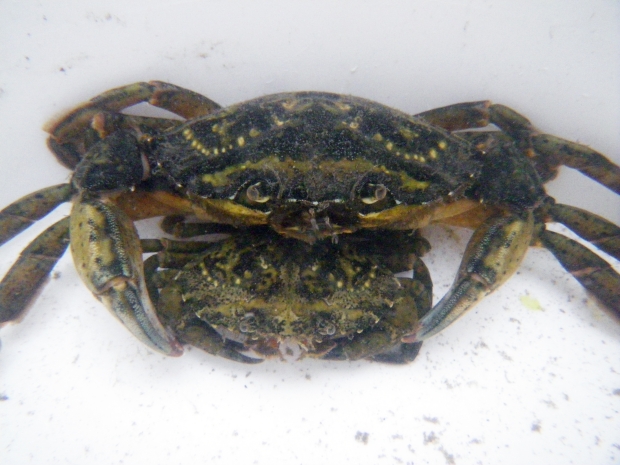
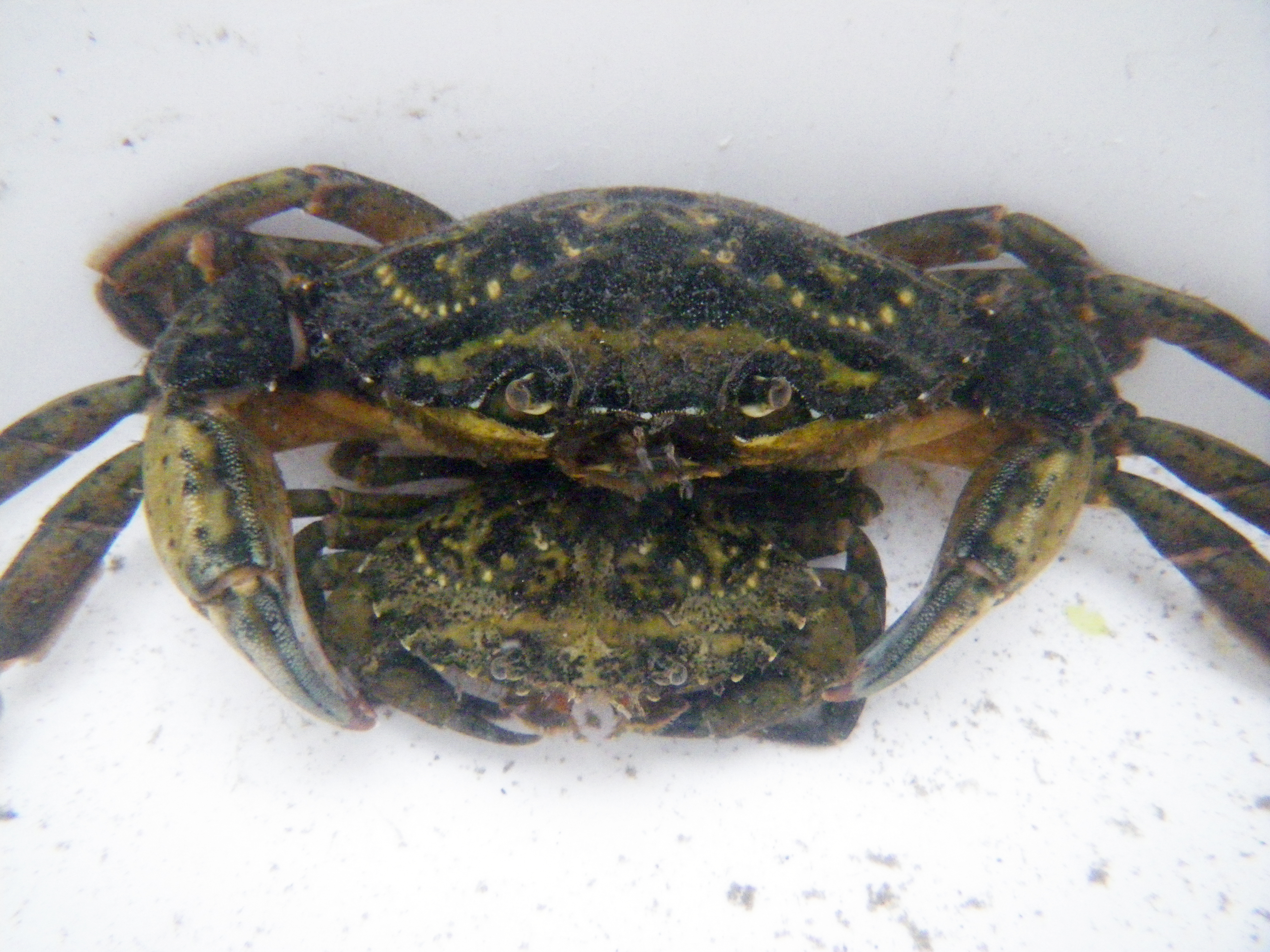
The research team, which included 24 invasion biologists from the National Science Foundation-funded Global Invasions Network, compiled data on 53 different plant and animal invaders. They pulled 37 from the list of “100 of the World’s Worst Invasive Alien Species,” and 16 from an exhaustive search of the published literature. They ended up with a list that included European green crabs, Asian kelp, nutria, brown tree snakes, garlic mustard and other common suspects. After combing through hundreds to thousands of papers to find published demographic data, they were able to do a statistical analysis of whether invaders were bigger, more reproductively successful and thus more abundant in their introduced ranges.
On the surface the assumption seemed to hold true. Across all 53 species, there was a 96 percent probability invaders would do better in their adopted ecosystems. But closer inspection revealed some surprising weaknesses within the paradigm. When they looked at individual species, they discovered a handful of extremely successful invaders were driving up the average. In reality, more than half of the species performed roughly the same at home versus abroad, and a few were even likely to perform worse in foreign territory.
This suggests that the key to a successful invasion depends less on the environment and more on the individual species doing the invading. Plants, for example, were more likely than animals to thrive abroad in this study. But even the plants showed a wide range of variability, with many (like garlic mustard) performing equally well in both their introduced and home ranges.
“The general notion that invasive species are doing something fundamentally different in their new versus their old ranges may be a fair starting point overall, but there is a lot of grey area even for the worst-case invaders,” Parker said. “These findings might also have applications for management. Some species might be invasive regardless of novel conditions, whereas others thrive only because of their new environment. If this ‘newfound’ success is reversible, it’s these latter species that might be our best bet to try and control.”
# # #
SI-195-2013