
Claws and Paws Pathway Opens at Smithsonian’s National Zoo
New Animals: Popcorn-Scented Binturongs and Fluffy Pallas’s Cat Sisters
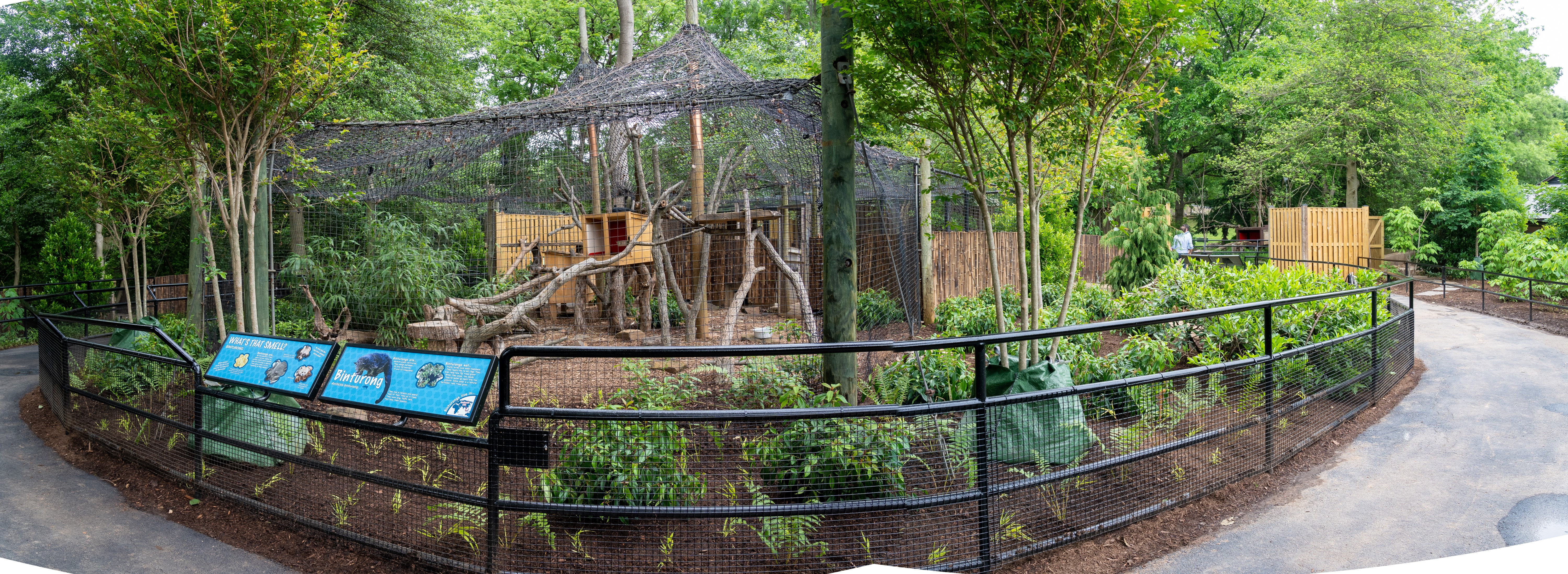
Starting today, visitors can view the Zoo’s new binturong exhibit at Claws and Paws Pathway. Credit: Skip Brown, Smithsonian’s National Zoo
Photos are available to download in the Zoo’s newsroom.
The Smithsonian’s National Zoo and Conservation Biology Institute invites visitors to prowl the new Claws and Paws Pathway exhibit opening to the public today, Friday, May 27. Visitors will encounter four species, including a North American porcupine, bobcats and the Zoo’s newest residents—binturongs and Pallas’s cats. While walking along the Claws and Paws Pathway, visitors can sniff out the unusual odors associated with these animals and look for their shared fascinating traits—paws and claws. The renovated area is located behind the prairie dog exhibit, adjacent to the Zoo’s Police Station and Mane Grille restaurant.
Claws and Paws Pathway is home to two shaggy and whiskered binturongs, a 10-year-old male named Hank and a 9-year-old female named Lola. Native to South and Southeast Asia, binturongs smell like buttered popcorn. Their scent glands have the same compound, 2-acetyl-1-pyrroline, found in popcorn and produce a musk with the distinctive, and familiar, aroma. Although sometimes referred to as bearcats, they are neither bears nor cats and are members of the Viverridae family, along with other small cat-like animals including civets and genets. However, binturongs are the only species in their genus, Arctictis. These unique mammals are listed as vulnerable by the International Union for Conservation of Nature (IUCN). While both binturongs came to the Zoo from Lincoln Park Zoo in Chicago, Lola was born in Spain.
Golden-eyed, 2-year-old Pallas’s cat sisters, Akar and Ceba, make their Zoo debut on the Claws and Paws Pathway. Native to central Asia, these felines are about the size of a house cat but look bigger because of their stocky build and long and dense fur. Pallas’s cats are considered a species of least concern by the IUCN. However, wild populations are declining due to habitat loss and accidental poisoning from poisoned prey items.
Bobcat males Cheese and Yoda and female Ollie communicate through scent, visual signals and vocalizations such as birdlike chirps called chortles. All three of the Zoo’s bobcats are rescues. While the IUCN considers bobcats a species of least concern, their native habitat across the United States is shrinking due to urbanization. Many of the bobcats that currently live in North American zoos were rescued due to injury, contracting a disease or were orphaned.
Visitors will remember Jeffrey, a 2-year-old male North American porcupine. North American porcupines weigh around 20 pounds and are one of the largest rodents found in North America. Native to the United States, Canada and northern Mexico, hunting by humans has caused their populations to decline.
# # #
SI-197-2022