Skip to main content Skip to main navigation
heart-solid My Visit Donate
Home Smithsonian Institution IK development site for ODI
Press Enter to activate a submenu, down arrow to access the items and Escape to close the submenu.
    • Overview
    • Museums and Zoo
    • Entry and Guidelines
    • Museum Maps
    • Dine and Shop
    • Accessibility
    • Visiting with Kids
    • Group Visits
    • Overview
    • Exhibitions
    • Online Events
    • All Events
    • IMAX & Planetarium
    • Overview
    • Topics
    • Collections
    • Research Resources
    • Stories
    • Podcasts
    • Overview
    • For Caregivers
    • For Educators
    • For Students
    • For Academics
    • For Lifelong Learners
    • Overview
    • Become a Member
    • Renew Membership
    • Make a Gift
    • Volunteer
    • Overview
    • Our Organization
    • Our Leadership
    • Reports and Plans
    • Newsdesk
heart-solid My Visit Donate
  1. Home
  2. forward-slash
  3. About
  4. forward-slash
  5. Newsdesk
  6. forward-slash
  7. Photos and Video
  8. forward-slash
  9. Proxima Centauri

About

  • Overview
  • Our Organization
    • Board of Regents
    • Museums and Zoo
    • Research Centers
    • Cultural Centers
    • Education Centers
    • General Counsel
    • Office of Human Resources
    • Office of Equal Opportunity
    • Office of Sponsored Projects
    • Office of Protection Services
  • Our Leadership
  • Reports and Plans
    • Annual Reports
    • Strategic Plan
    • Smithsonian Dashboard
  • Newsdesk
    • News Releases
    • Media Contacts
    • Photos and Video
    • Media Kits
    • Fact Sheets
    • Visitor Stats
    • Secretary and Admin Bios
    • Filming Requests

Proxima Centauri

Media Photo/Video

October 11, 2016

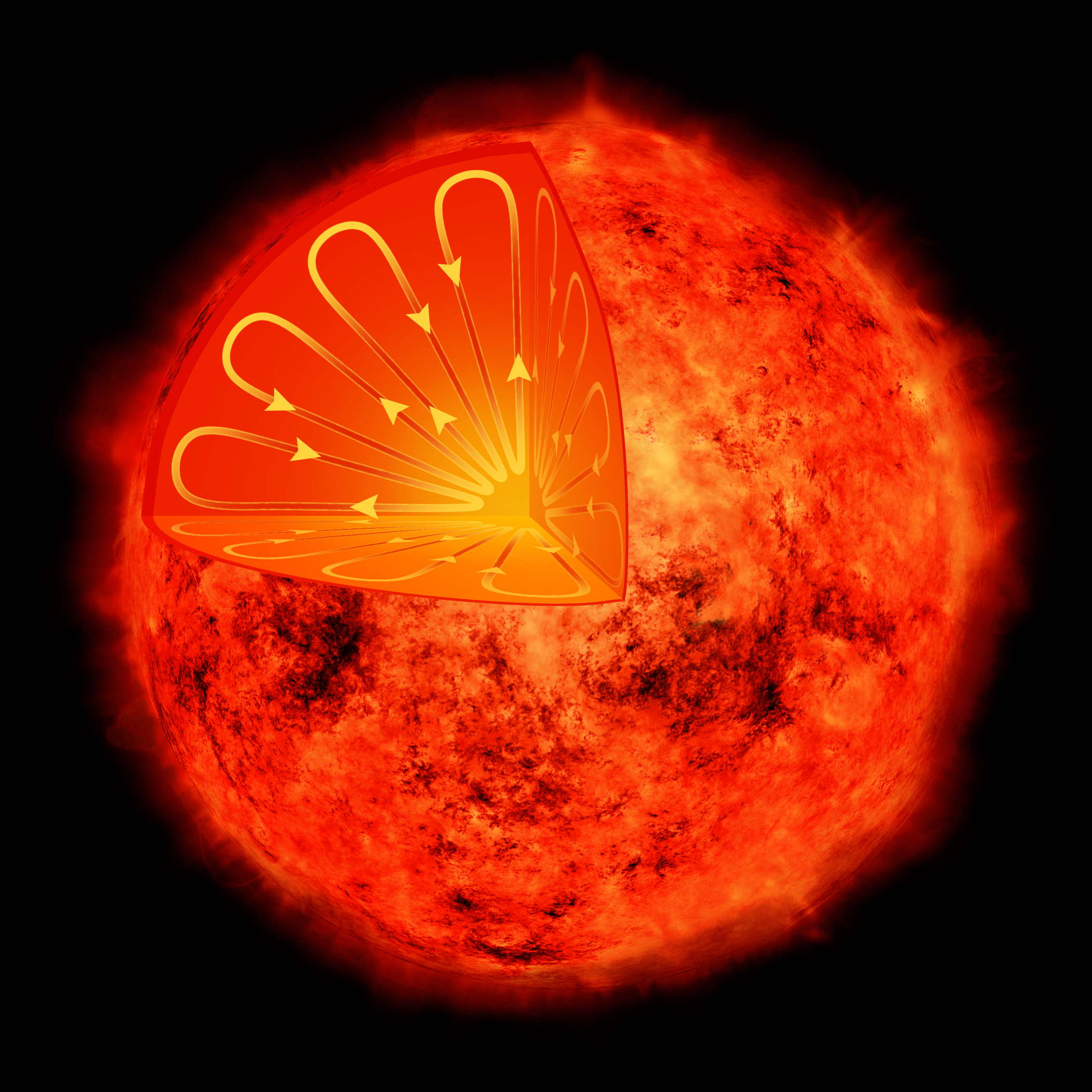
Artists rendering of firey planet with inset indicating gas flow
download Download hires_20.jpg

An artist's illustration depicts the interior of a low-mass star. Such stars have different interior structures than our Sun, so they are not expected to show magnetic activity cycles. However, astronomers have discovered that the nearby star Proxima Centauri defies that expectation and shows signs of a 7-year activity cycle.


Credit: NASA/CXC/M.Weiss


Tags

  • Astrophysical Observatory

Related Media


Related Content

  • Proxima Centauri Might Be More Sun-like Than We Thought

    In August astronomers announced that the nearby star Proxima Centauri hosts an Earth-sized planet (called Proxima b) in its habitable zone. At first glance, Proxima Centauri seems nothing like our sun. It’s a small, cool, red dwarf star only one-tenth as massive and one-thousandth as luminous as the sun.
    • October 11, 2016
    • News Release
    • Astrophysical Observatory
arrow-up Back to top
Home
  • Facebook facebook
  • Instagram instagram
  • LinkedIn linkedin
  • YouTube youtube

  • Contact Us
  • Get Involved
  • Shop Online
  • Job Opportunities
  • Equal Opportunity
  • Inspector General
  • Records Requests
  • Accessibility
  • Host Your Event
  • Press Room
  • Privacy
  • Terms of Use