Skip to main content Skip to main navigation
heart-solid My Visit Donate
Home Smithsonian Institution IK development site for ODI
Press Enter to activate a submenu, down arrow to access the items and Escape to close the submenu.
    • Overview
    • Museums and Zoo
    • Entry and Guidelines
    • Museum Maps
    • Dine and Shop
    • Accessibility
    • Visiting with Kids
    • Group Visits
    • Overview
    • Exhibitions
    • Online Events
    • All Events
    • IMAX & Planetarium
    • Overview
    • Topics
    • Collections
    • Research Resources
    • Stories
    • Podcasts
    • Overview
    • For Caregivers
    • For Educators
    • For Students
    • For Academics
    • For Lifelong Learners
    • Overview
    • Become a Member
    • Renew Membership
    • Make a Gift
    • Volunteer
    • Overview
    • Our Organization
    • Our Leadership
    • Reports and Plans
    • Newsdesk
heart-solid My Visit Donate
  1. Home
  2. forward-slash
  3. About
  4. forward-slash
  5. Newsdesk
  6. forward-slash
  7. Photos and Video
  8. forward-slash
  9. First Discovery of a Binary Companion for a Type 1a Supernova

About

  • Overview
  • Our Organization
    • Board of Regents
    • Museums and Zoo
    • Research Centers
    • Cultural Centers
    • Education Centers
    • General Counsel
    • Office of Human Resources
    • Office of Equal Opportunity
    • Office of Sponsored Projects
    • Office of Protection Services
  • Our Leadership
  • Reports and Plans
    • Annual Reports
    • Strategic Plan
    • Smithsonian Dashboard
  • Newsdesk
    • News Releases
    • Media Contacts
    • Photos and Video
    • Media Kits
    • Fact Sheets
    • Visitor Stats
    • Secretary and Admin Bios
    • Filming Requests

First Discovery of a Binary Companion for a Type 1a Supernova
Media Photo/Video

March 22, 2016

Telescope image of supernova
download Download hires_15.jpg

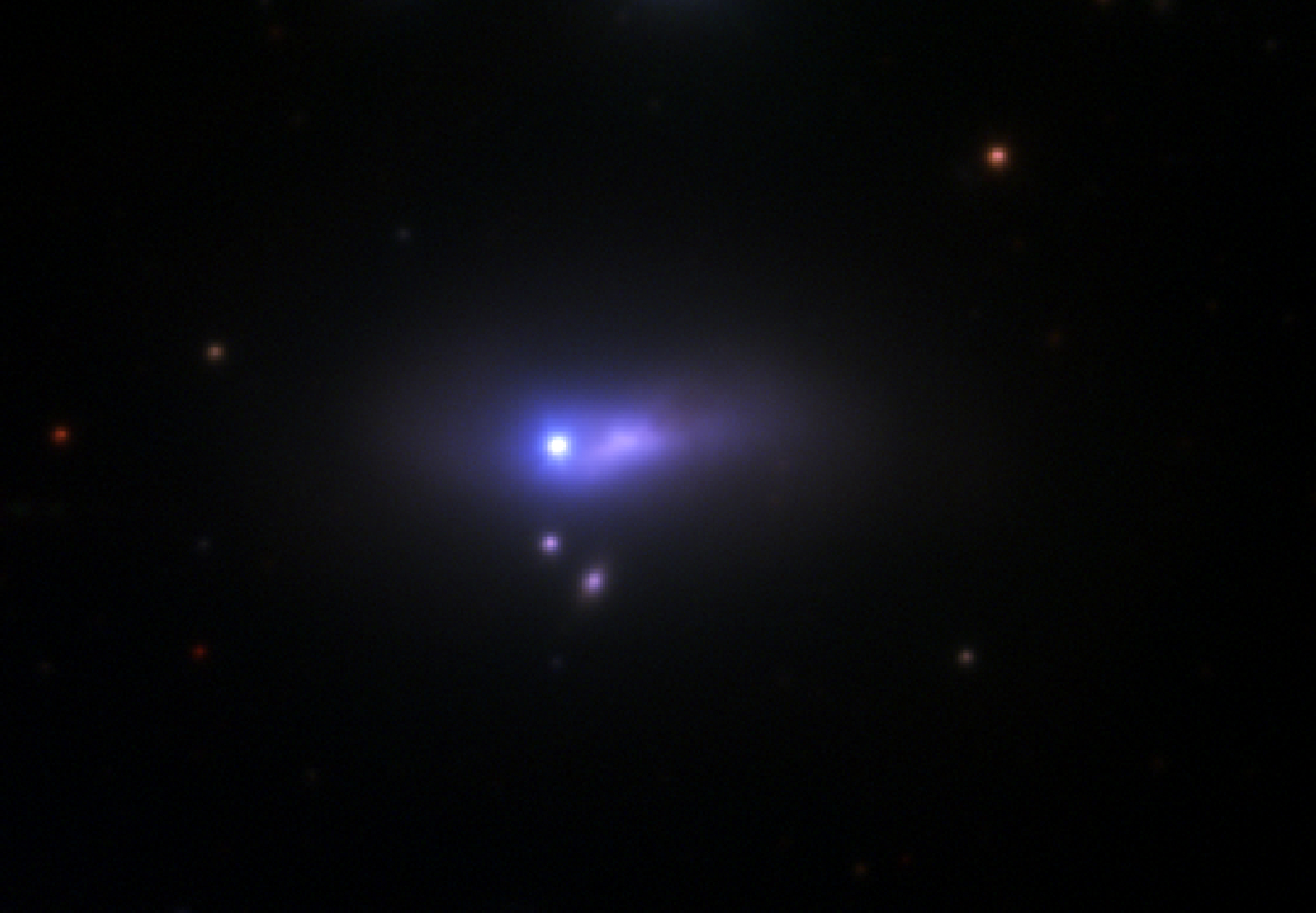
The blue-white dot at the center of this image is supernova 2012cg, seen by the 1.2-meter telescope at Fred Lawrence Whipple Observatory. At 50 million light-years away, this supernova is so distant that its host galaxy, the edge-on spiral NGC 4424, appears here as only an extended smear of purple light.


Image by Peter Challis / Harvard-Smithsonian Center for Astrophysics


Tags

  • Astrophysical Observatory

Related Media


Related Content

  • placeholder-logo

    First Discovery of a Binary Companion for a Type Ia Supernova

    A team of astronomers including Harvard’s Robert Kirshner and Peter Challis has detected a flash of light from the companion to an exploding star. This is the first time astronomers have witnessed the impact of an exploding star on its neighbor. It provides the best evidence on the type of binary star system that leads to Type Ia supernovae.
    • March 22, 2016
    • News Release
    • Astrophysical Observatory
arrow-up Back to top
Home
  • Facebook facebook
  • Instagram instagram
  • LinkedIn linkedin
  • YouTube youtube

  • Contact Us
  • Get Involved
  • Shop Online
  • Job Opportunities
  • Equal Opportunity
  • Inspector General
  • Records Requests
  • Accessibility
  • Host Your Event
  • Press Room
  • Privacy
  • Terms of Use