Skip to main content Skip to main navigation
heart-solid My Visit Donate
Home Smithsonian Institution IK development site for ODI
Press Enter to activate a submenu, down arrow to access the items and Escape to close the submenu.
    • Overview
    • Museums and Zoo
    • Entry and Guidelines
    • Museum Maps
    • Dine and Shop
    • Accessibility
    • Visiting with Kids
    • Group Visits
    • Overview
    • Exhibitions
    • Online Events
    • All Events
    • IMAX & Planetarium
    • Overview
    • Topics
    • Collections
    • Research Resources
    • Stories
    • Podcasts
    • Overview
    • For Caregivers
    • For Educators
    • For Students
    • For Academics
    • For Lifelong Learners
    • Overview
    • Become a Member
    • Renew Membership
    • Make a Gift
    • Volunteer
    • Overview
    • Our Organization
    • Our Leadership
    • Reports and Plans
    • Newsdesk
heart-solid My Visit Donate
  1. Home
  2. forward-slash
  3. About
  4. forward-slash
  5. Newsdesk
  6. forward-slash
  7. Photos and Video
  8. forward-slash
  9. Einstein's Planet

About

  • Overview
  • Our Organization
    • Board of Regents
    • Museums and Zoo
    • Research Centers
    • Cultural Centers
    • Education Centers
    • General Counsel
    • Office of Human Resources
    • Office of Equal Opportunity
    • Office of Sponsored Projects
    • Office of Protection Services
  • Our Leadership
  • Reports and Plans
    • Annual Reports
    • Strategic Plan
    • Smithsonian Dashboard
  • Newsdesk
    • News Releases
    • Media Contacts
    • Photos and Video
    • Media Kits
    • Fact Sheets
    • Visitor Stats
    • Secretary and Admin Bios
    • Filming Requests

Einstein's Planet

Media Photo/Video

June 13, 2016

Einstein's Planet
download Download einsteins-planet.jpg

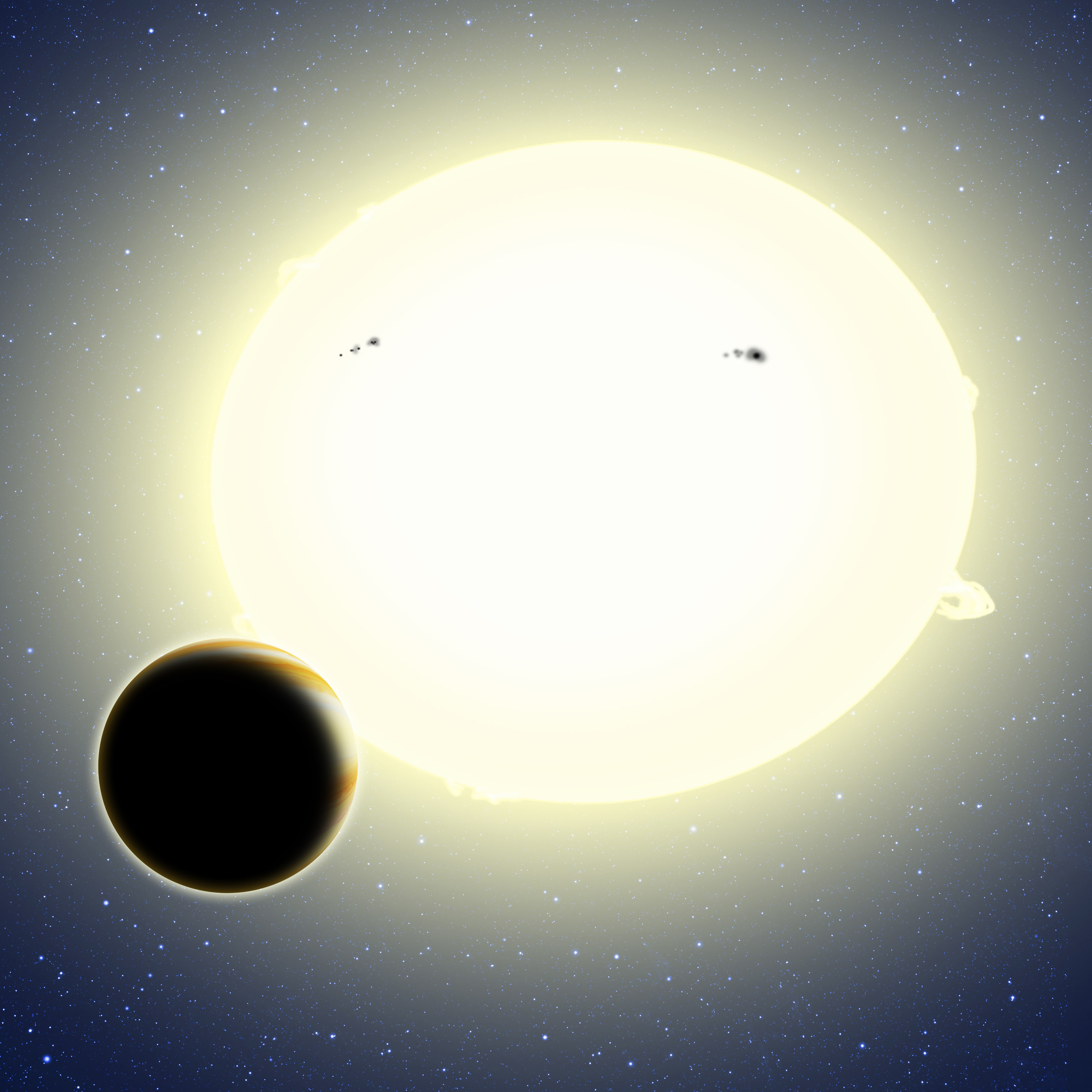
“Einstein’s planet,” formally known as Kepler-76b, is a “hot Jupiter” that orbits its star every 1.5 days. Its diameter is about 25 percent larger than Jupiter and it weighs twice as much. This artist's conception shows Kepler-76b orbiting its host star, which has been tidally distorted into a slight football shape (exaggerated here for effect). The planet was detected using the BEER algorithm, which looked for brightness changes in the star as the planet orbits due to relativistic BEaming, Ellipsoidal variations, and Reflected light from the planet.


Tags

  • Astrophysical Observatory

Related Media


Related Content

  • Kepler 76b orbit

    New Method of Finding Planets Scores Its First Discovery

    Detecting alien worlds presents a significant challenge since they are small, faint, and close to their stars. The two most prolific techniques for finding exoplanets are radial velocity (looking for wobbling stars) and transits (looking for dimming stars).
    • May 13, 2013
    • News Release
    • Astrophysical Observatory
arrow-up Back to top
Home
  • Facebook facebook
  • Instagram instagram
  • LinkedIn linkedin
  • YouTube youtube

  • Contact Us
  • Get Involved
  • Shop Online
  • Job Opportunities
  • Equal Opportunity
  • Inspector General
  • Records Requests
  • Accessibility
  • Host Your Event
  • Press Room
  • Privacy
  • Terms of Use