Skip to main content Skip to main navigation
heart-solid My Visit Donate
Home Smithsonian Institution IK development site for ODI
Press Enter to activate a submenu, down arrow to access the items and Escape to close the submenu.
    • Overview
    • Museums and Zoo
    • Entry and Guidelines
    • Museum Maps
    • Dine and Shop
    • Accessibility
    • Visiting with Kids
    • Group Visits
    • Overview
    • Exhibitions
    • Online Events
    • All Events
    • IMAX & Planetarium
    • Overview
    • Topics
    • Collections
    • Research Resources
    • Stories
    • Podcasts
    • Overview
    • For Caregivers
    • For Educators
    • For Students
    • For Academics
    • For Lifelong Learners
    • Overview
    • Become a Member
    • Renew Membership
    • Make a Gift
    • Volunteer
    • Overview
    • Our Organization
    • Our Leadership
    • Reports and Plans
    • Newsdesk
heart-solid My Visit Donate
  1. Home
  2. forward-slash
  3. About
  4. forward-slash
  5. Newsdesk
  6. forward-slash
  7. News Releases
  8. forward-slash
  9. Olinguito

About

  • Overview
  • Our Organization
    • Board of Regents
    • Museums and Zoo
    • Research Centers
    • Cultural Centers
    • Education Centers
    • General Counsel
    • Office of Human Resources
    • Office of Equal Opportunity
    • Office of Sponsored Projects
    • Office of Protection Services
  • Our Leadership
  • Reports and Plans
    • Annual Reports
    • Strategic Plan
    • Smithsonian Dashboard
  • Newsdesk
    • News Releases
    • Media Contacts
    • Photos and Video
    • Media Kits
    • Fact Sheets
    • Visitor Stats
    • Secretary and Admin Bios
    • Filming Requests

Olinguito

(Bassaricyon neblina)
Media Fact Sheet

August 15, 2013

Olinguito

versión en español

DESCRIPTION:
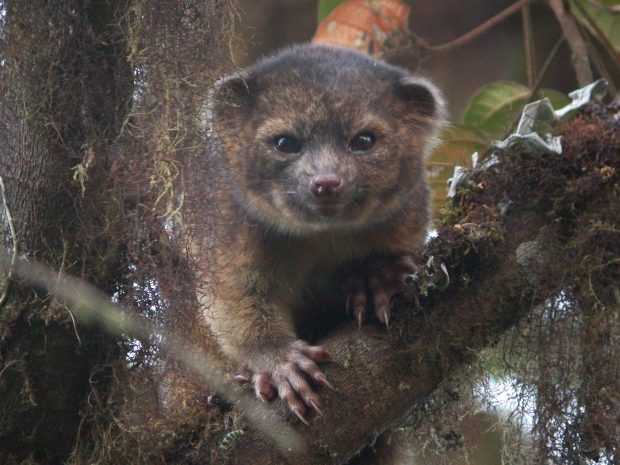
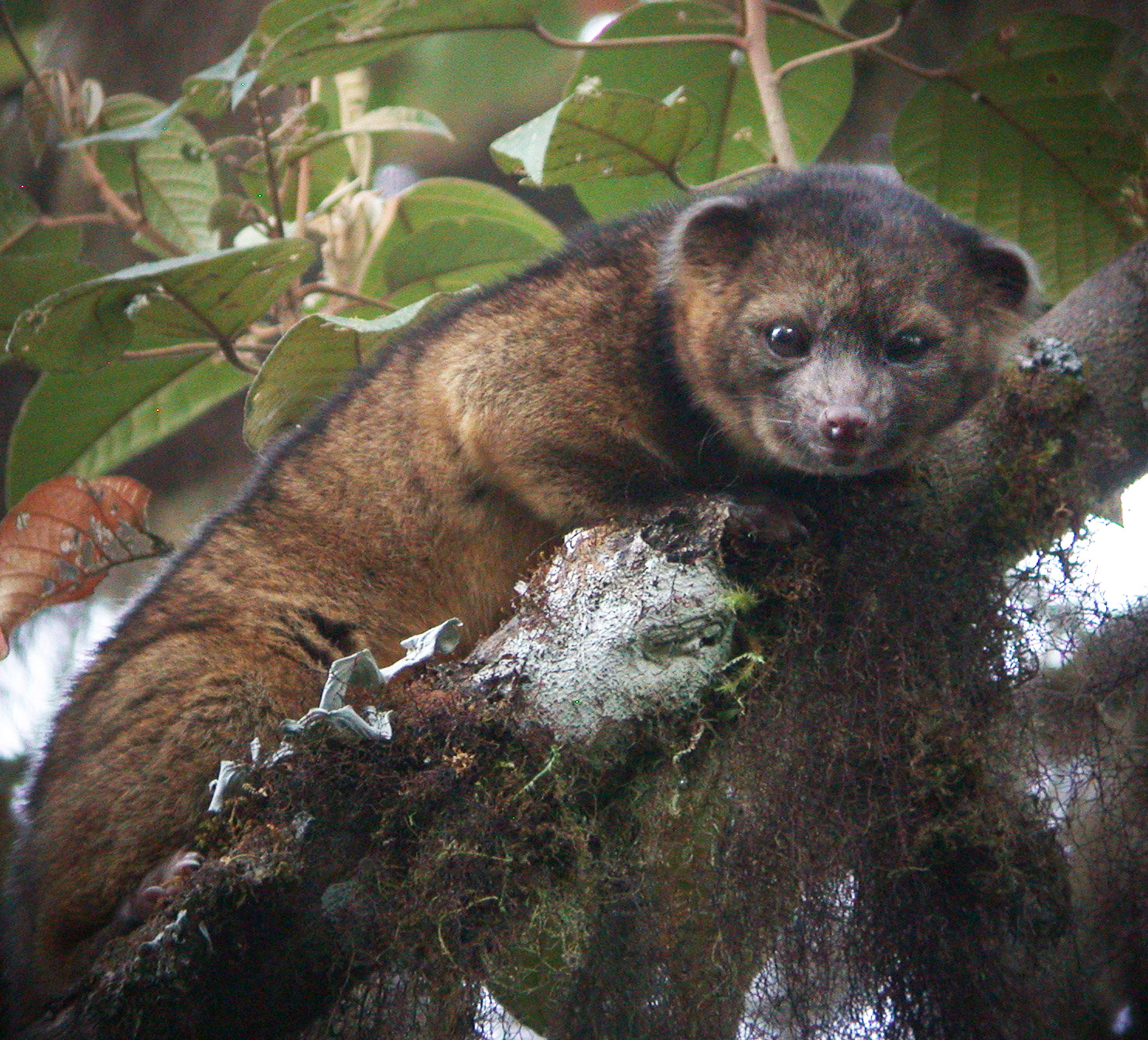
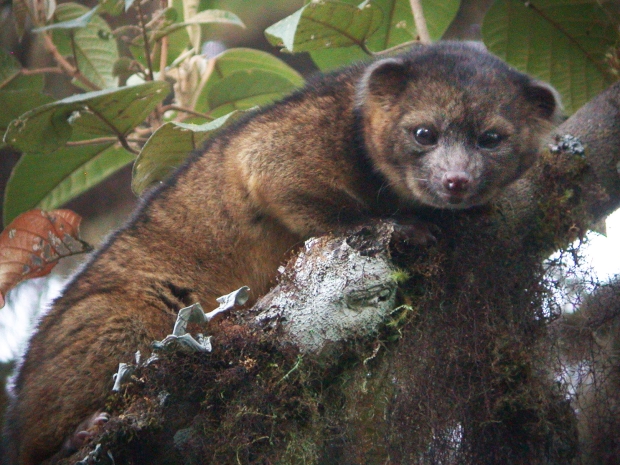
The olinguito is the smallest member of the raccoon family. It has thick, woolly fur that is denser and more colorful (orange or reddish brown) than its closest relatives, the olingos. Its head and body length is 14 inches long (355 mm), plus a tail 13-17 inches in length (335-425 mm), and it weighs 2 pounds (900 grams). Males and females are similar in size.

DIET and BEHAVIOR:
The olinguito mainly eats fruit, but may also eat some insects and nectar.

These solitary animals live in trees and are mostly nocturnal. It is an adept jumper that can leap from tree to tree in the forest canopy. Mothers raise a single baby at a time.

HABITAT and RANGE:
The olinguito is found only in cloud forests of the northern Andes Mountains, in Ecuador and Colombia, at high elevations  (5,000 to 9,000 feet above sea level).

# # #

SI-67-2013


Tags

  • Natural History Museum
  • Research News

Photos

Olinguito

Image

document

Olinguito 1

08.15.2013
small furry mammal

Image

document

Olinguito 2

08.15.2013
Olinguito

Image

document

Olinguito 3

08.15.2013
Olinguito at Zoo

Image

document

Olinguito at Zoo

08.15.2013
Olinguito Distribution Map

Image

document

Olinguito Distribution Map

08.15.2013
arrow-up Back to top
Home
  • Facebook facebook
  • Instagram instagram
  • LinkedIn linkedin
  • YouTube youtube

  • Contact Us
  • Get Involved
  • Shop Online
  • Job Opportunities
  • Equal Opportunity
  • Inspector General
  • Records Requests
  • Accessibility
  • Host Your Event
  • Press Room
  • Privacy
  • Terms of Use