Skip to main content Skip to main navigation
heart-solid My Visit Donate
Home Smithsonian Institution IK development site for ODI
Press Enter to activate a submenu, down arrow to access the items and Escape to close the submenu.
    • Overview
    • Museums and Zoo
    • Entry and Guidelines
    • Museum Maps
    • Dine and Shop
    • Accessibility
    • Visiting with Kids
    • Group Visits
    • Overview
    • Exhibitions
    • Online Events
    • All Events
    • IMAX & Planetarium
    • Overview
    • Topics
    • Collections
    • Research Resources
    • Stories
    • Podcasts
    • Overview
    • For Caregivers
    • For Educators
    • For Students
    • For Academics
    • For Lifelong Learners
    • Overview
    • Become a Member
    • Renew Membership
    • Make a Gift
    • Volunteer
    • Overview
    • Our Organization
    • Our Leadership
    • Reports and Plans
    • Newsdesk
heart-solid My Visit Donate
  1. Home
  2. forward-slash
  3. Explore
  4. forward-slash
  5. Collections
  6. forward-slash
  7. Smithsonian Snapshot
  8. forward-slash
  9. Wolf Spider

Explore

  • Overview
  • Topics
    • Art & Design
    • History & Culture
    • Science & Nature
    • Tech & Innovation
  • Collections
    • Open Access
    • Smithsonian Snapshot
    • Collection Spotlights
  • Research Resources
    • Libraries
    • Archives
  • Stories
  • Podcasts
Smithsonian Snapshot

Wolf Spider

December 5, 2014
spider

I See You

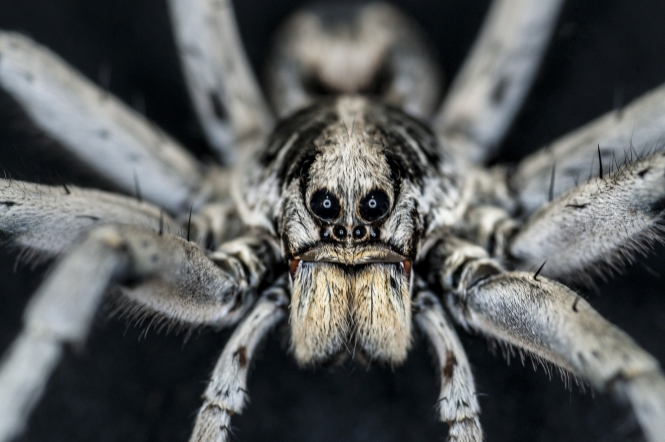
Wolf spiders (Lycosa Sp.) such as this one have great eyesight thanks to their two large forward-facing eyes plus six more! Instead of making webs to catch prey, wolf spiders are solitary hunters that depend on their terrific eyesight to hunt their prey at night.   

Their diet consists of crickets, ants, other spiders and grasshoppers. Some of the larger species can even take down a small lizard or frog. Wolf spiders may be tough hunters, but they’re not without predators, including some species of hunting wasps. The wasp paralyzes the spider with its sting, drags it to a burrow and lays an egg on its body. When the wasp larva hatches, the wolf spider becomes its first meal.

Wolf spiders live mostly in forests, grasslands and woodlands and can easily be found in people’s backyards. But if you find one in your garden, don’t worry—their venom is not harmful to humans.

This particular wolf spider lives in the O. Orkin Insect Zoo at the Smithsonian’s National Museum of Natural History.

arrow-up Back to top
Home
  • Facebook facebook
  • Instagram instagram
  • LinkedIn linkedin
  • YouTube youtube

  • Contact Us
  • Get Involved
  • Shop Online
  • Job Opportunities
  • Equal Opportunity
  • Inspector General
  • Records Requests
  • Accessibility
  • Host Your Event
  • Press Room
  • Privacy
  • Terms of Use