Skip to main content Skip to main navigation
heart-solid My Visit Donate
Home Smithsonian Institution IK development site for ODI
Press Enter to activate a submenu, down arrow to access the items and Escape to close the submenu.
    • Overview
    • Museums and Zoo
    • Entry and Guidelines
    • Museum Maps
    • Dine and Shop
    • Accessibility
    • Visiting with Kids
    • Group Visits
    • Overview
    • Exhibitions
    • Online Events
    • All Events
    • IMAX & Planetarium
    • Overview
    • Topics
    • Collections
    • Research Resources
    • Stories
    • Podcasts
    • Overview
    • For Caregivers
    • For Educators
    • For Students
    • For Academics
    • For Lifelong Learners
    • Overview
    • Become a Member
    • Renew Membership
    • Make a Gift
    • Volunteer
    • Overview
    • Our Organization
    • Our Leadership
    • Reports and Plans
    • Newsdesk
heart-solid My Visit Donate
  1. Home
  2. forward-slash
  3. Explore
  4. forward-slash
  5. Collections
  6. forward-slash
  7. Smithsonian Snapshot
  8. forward-slash
  9. Waiter, There’s a Tag on My Crab!

Explore

  • Overview
  • Topics
    • Art & Design
    • History & Culture
    • Science & Nature
    • Tech & Innovation
  • Collections
    • Open Access
    • Smithsonian Snapshot
    • Collection Spotlights
  • Research Resources
    • Libraries
    • Archives
  • Stories
  • Podcasts
Smithsonian Snapshot

Waiter, There’s a Tag on My Crab!
September 29, 2015
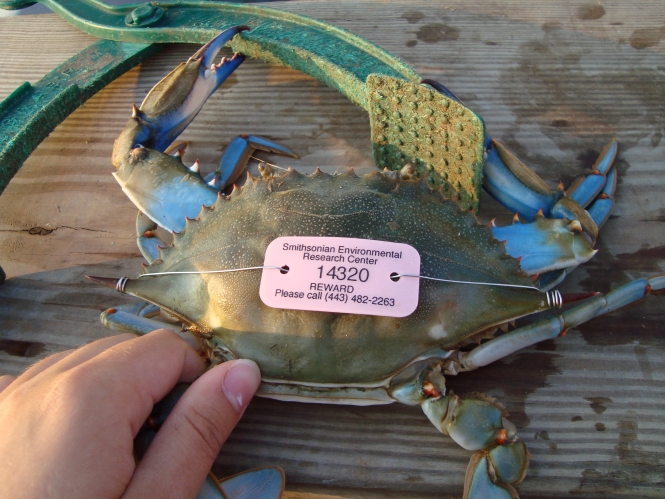
crab with tag by the Smithsonian Environmental Research Center name and phone number

Smithsonian Environmental Research Center

When the population of one of the Chesapeake Bay’s most famous residents, the blue crab, went into rapid decline due to overfishing, the Smithsonian stepped in to help. Scientists at the Smithsonian Environmental Research Center (SERC) have been tracking blue crabs throughout the Chesapeake Bay for decades to understand the impact fisheries have on crab populations.

After the crabs are caught, scientists record their condition, size and sex; next, they are given a tag with a number unique to that animal and the phone number for the “Blue Crab Hotline.” The crab is then released back into the Bay.

Anyone who catches a tagged crab is asked to call the hotline to report where the crab was caught. This way SERC scientists can track the movements of individuals and get a better sense of how blue crabs move about the Bay―knowledge that will help protect crabs from being overfished in the future.

Most reports to the hotline are from within the Chesapeake Bay, but crabs with SERC tags have been reported off the coast of North Carolina and Florida. And while it was probably helped by a commercial fishery that ships to other locations, one crab was steamed and served to a person in California, who later called the hotline with the crab’s tag number.

arrow-up Back to top
Home
  • Facebook facebook
  • Instagram instagram
  • LinkedIn linkedin
  • YouTube youtube

  • Contact Us
  • Get Involved
  • Shop Online
  • Job Opportunities
  • Equal Opportunity
  • Inspector General
  • Records Requests
  • Accessibility
  • Host Your Event
  • Press Room
  • Privacy
  • Terms of Use