Skip to main content Skip to main navigation
heart-solid My Visit Donate
Home Smithsonian Institution IK development site for ODI
Press Enter to activate a submenu, down arrow to access the items and Escape to close the submenu.
    • Overview
    • Museums and Zoo
    • Entry and Guidelines
    • Museum Maps
    • Dine and Shop
    • Accessibility
    • Visiting with Kids
    • Group Visits
    • Overview
    • Exhibitions
    • Online Events
    • All Events
    • IMAX & Planetarium
    • Overview
    • Topics
    • Collections
    • Research Resources
    • Stories
    • Podcasts
    • Overview
    • For Caregivers
    • For Educators
    • For Students
    • For Academics
    • For Lifelong Learners
    • Overview
    • Become a Member
    • Renew Membership
    • Make a Gift
    • Volunteer
    • Overview
    • Our Organization
    • Our Leadership
    • Reports and Plans
    • Newsdesk
heart-solid My Visit Donate
  1. Home
  2. forward-slash
  3. Explore
  4. forward-slash
  5. Collections
  6. forward-slash
  7. Smithsonian Snapshot
  8. forward-slash
  9. The Unicorns of the Sea: Narwhals

Explore

  • Overview
  • Topics
    • Art & Design
    • History & Culture
    • Science & Nature
    • Tech & Innovation
  • Collections
    • Open Access
    • Smithsonian Snapshot
    • Collection Spotlights
  • Research Resources
    • Libraries
    • Archives
  • Stories
  • Podcasts
Smithsonian Libraries

The Unicorns of the Sea: Narwhals
September 7, 2017
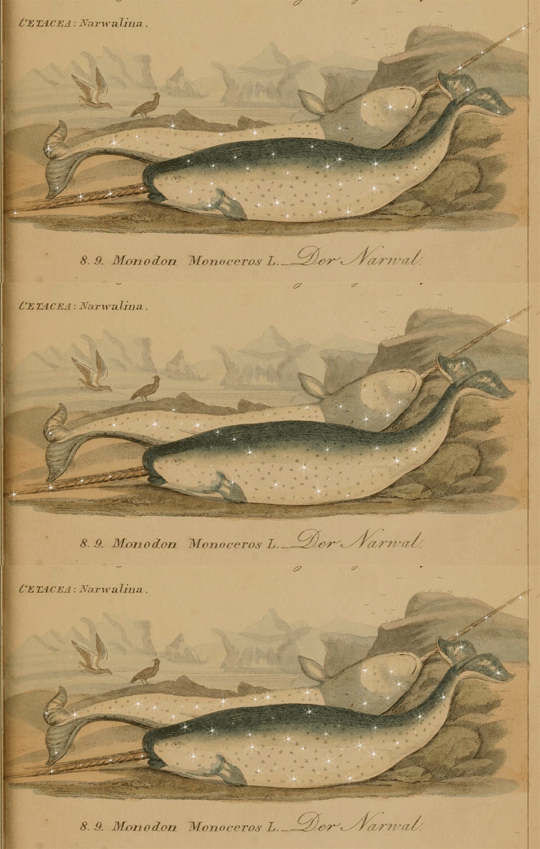
drawing of narwhals

Die Cetaceen oder Walthieer, (1846) by H.G. Ludwig Reichenbach. Abt.1, Bd.1 in Die vollständigste Naturgeschichte der Vögel [Complete Natural History of Birds]. Smithsonian Libraries.

Their tusks are reminiscent of the mythical unicorn, but make no “mythtake,” although they are the stuff of legend, narwhals are real animals. Mentions of the narwhal go back for hundreds of years, including stories of them throughout medieval Europe and a detailed description of the aquatic mammal in Herman Melville’s Moby Dick.

Not only are they real, narwhals are central to the Inuit people native to Greenland, Alaska and Canada. Hunted by Inuit on Baffin Island in Canada, the narwhal’s meat provides sustenance for the body, and its tusk, valued for its artistic and spiritual meaning, provides sustenance for the soul.

The relationship between the Inuit and narwhal, along with insights into what makes this mysterious animal and its changing ecosystem important, are explored in the exhibition “Narwhal: Revealing an Arctic Legend” at the Smithsonian’s National Museum of Natural History until 2019. By presenting the vantage point of the Inuit and examining the latest scientific knowledge about these animals, the exhibition illuminates the interconnectedness among narwhals, people and their ecosystems.

View the scanned book Die vollständigste Naturgeschichte der Vögel, from the Smithsonian Libraries catalog.

arrow-up Back to top
Home
  • Facebook facebook
  • Instagram instagram
  • LinkedIn linkedin
  • YouTube youtube

  • Contact Us
  • Get Involved
  • Shop Online
  • Job Opportunities
  • Equal Opportunity
  • Inspector General
  • Records Requests
  • Accessibility
  • Host Your Event
  • Press Room
  • Privacy
  • Terms of Use