Skip to main content Skip to main navigation
heart-solid My Visit Donate
Home Smithsonian Institution IK development site for ODI
Press Enter to activate a submenu, down arrow to access the items and Escape to close the submenu.
    • Overview
    • Museums and Zoo
    • Entry and Guidelines
    • Museum Maps
    • Dine and Shop
    • Accessibility
    • Visiting with Kids
    • Group Visits
    • Overview
    • Exhibitions
    • Online Events
    • All Events
    • IMAX & Planetarium
    • Overview
    • Topics
    • Collections
    • Research Resources
    • Stories
    • Podcasts
    • Overview
    • For Caregivers
    • For Educators
    • For Students
    • For Academics
    • For Lifelong Learners
    • Overview
    • Become a Member
    • Renew Membership
    • Make a Gift
    • Volunteer
    • Overview
    • Our Organization
    • Our Leadership
    • Reports and Plans
    • Newsdesk
heart-solid My Visit Donate
  1. Home
  2. forward-slash
  3. Explore
  4. forward-slash
  5. Collections
  6. forward-slash
  7. Smithsonian Snapshot
  8. forward-slash
  9. Titan Beetle

Explore

  • Overview
  • Topics
    • Art & Design
    • History & Culture
    • Science & Nature
    • Tech & Innovation
  • Collections
    • Open Access
    • Smithsonian Snapshot
    • Collection Spotlights
  • Research Resources
    • Libraries
    • Archives
  • Stories
  • Podcasts
Smithsonian Snapshot

Titan Beetle

May 31, 2011
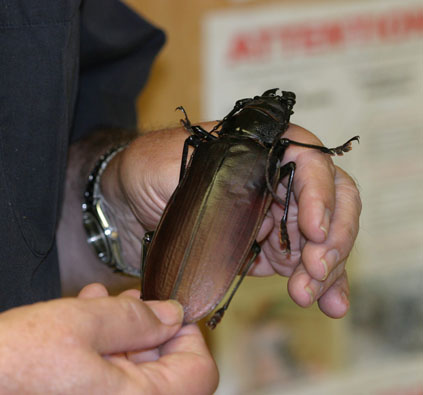
Titan beetle (Titanus giganteus)

Titan beetle (Titanus giganteus), Smithsonian’s National Museum of Natural History

The titan beetle (Titanus giganteus) is the largest known beetle in the Amazon rain forest and one of the largest insect species in the world. It typically lives in the rain forests of Colombia, Ecuador, Peru, Bolivia, the Guianas and north-central Brazil. Adult titan beetles can grow up to 6.5 inches in length. They defend themselves against predators by using their sharp spines and strong jaws. It is said that their mandibles can snap pencils in half and cut into human flesh.

Like many large adult insects, titan beetles locate mates by flight and sensing air chemicals (pheromones).

This is the largest specimen of titan beetle in the National Entomological Collection at the Smithsonian’s National Museum of Natural History. This beetle measures 5.5 inches.

arrow-up Back to top
Home
  • Facebook facebook
  • Instagram instagram
  • LinkedIn linkedin
  • YouTube youtube

  • Contact Us
  • Get Involved
  • Shop Online
  • Job Opportunities
  • Equal Opportunity
  • Inspector General
  • Records Requests
  • Accessibility
  • Host Your Event
  • Press Room
  • Privacy
  • Terms of Use