Skip to main content Skip to main navigation
heart-solid My Visit Donate
Home Smithsonian Institution IK development site for ODI
Press Enter to activate a submenu, down arrow to access the items and Escape to close the submenu.
    • Overview
    • Museums and Zoo
    • Entry and Guidelines
    • Museum Maps
    • Dine and Shop
    • Accessibility
    • Visiting with Kids
    • Group Visits
    • Overview
    • Exhibitions
    • Online Events
    • All Events
    • IMAX & Planetarium
    • Overview
    • Topics
    • Collections
    • Research Resources
    • Stories
    • Podcasts
    • Overview
    • For Caregivers
    • For Educators
    • For Students
    • For Academics
    • For Lifelong Learners
    • Overview
    • Become a Member
    • Renew Membership
    • Make a Gift
    • Volunteer
    • Overview
    • Our Organization
    • Our Leadership
    • Reports and Plans
    • Newsdesk
heart-solid My Visit Donate
  1. Home
  2. forward-slash
  3. Explore
  4. forward-slash
  5. Collections
  6. forward-slash
  7. Smithsonian Snapshot
  8. forward-slash
  9. Taking Off With a Jet Pack

Explore

  • Overview
  • Topics
    • Art & Design
    • History & Culture
    • Science & Nature
    • Tech & Innovation
  • Collections
    • Open Access
    • Smithsonian Snapshot
    • Collection Spotlights
  • Research Resources
    • Libraries
    • Archives
  • Stories
  • Podcasts
Smithsonian Snapshot

Taking Off With a Jet Pack
November 9, 2021
Jet Pack

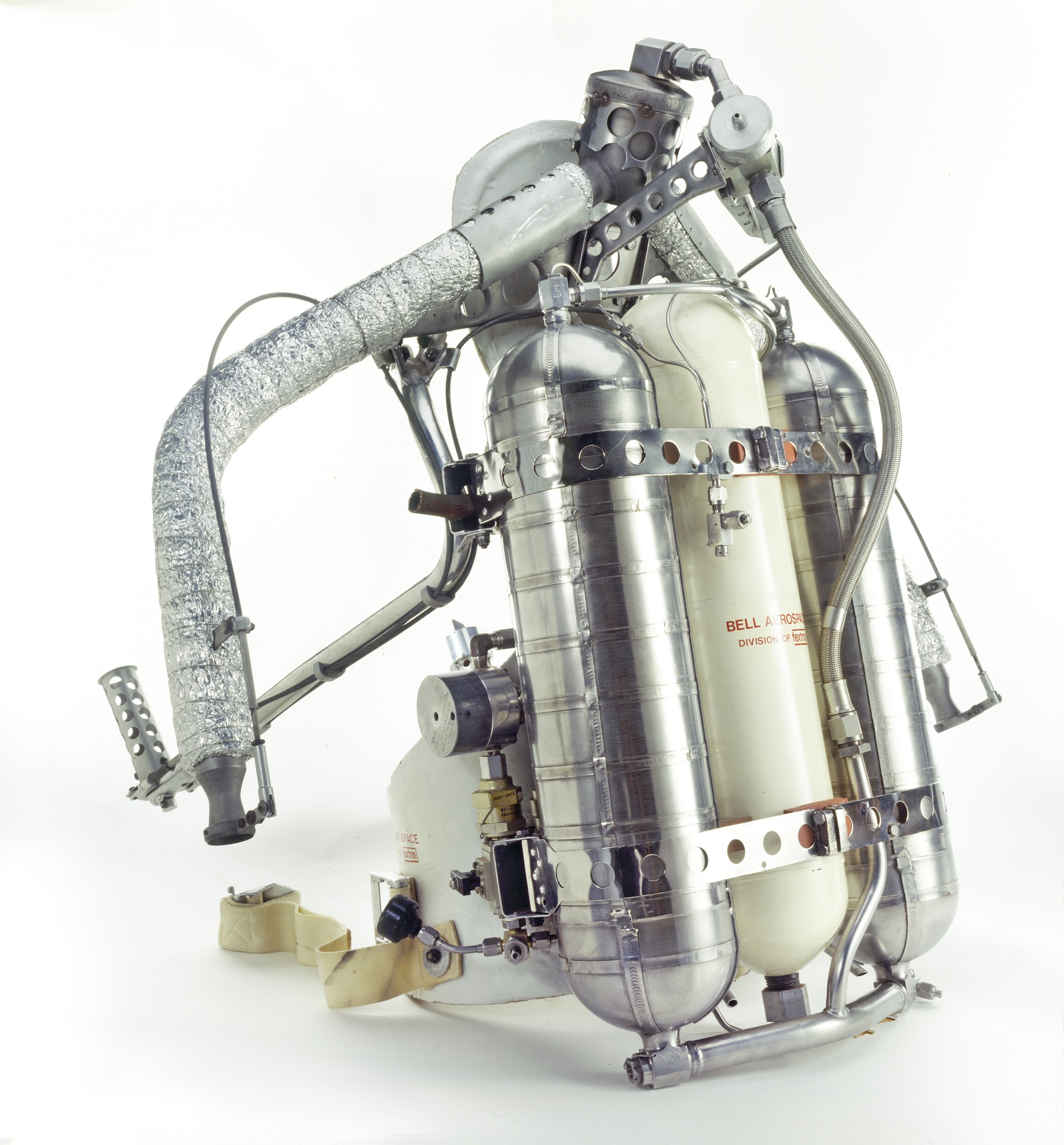
Rocket Belt, Bell No. 2. Smithsonian’s National Air and Space Museum, Steven F. Udvar-Hazy Center. Carolyn Russo/NASM

This Rocket Belt No. 2 was worn by William P. "Bill" Suitor while serving as a rocket belt or jet pack test pilot for Bell Aerosystems from March 1964 to June 1970. He flew it on several occasions, such as the opening ceremony of the 1984 Summer Olympic Games in Los Angeles and during a short scene in the classic 1965 James Bond film, "Thunderball."

Ultimately, the jet pack turned out to be impractical and it did not “take off”: The weight of the fuel is a big impediment, so the Rocket Belt can only carry the operator for short distances, and it is difficult to control and expensive to build and operate.

So, although not a soaring success—the jet pack still fires the imagination and visions of future flight.

The Rocket Belt No. 2 is in the Smithsonian’s permanent collections at the National Air and Space Museum’s Steven F. Udvar-Hazy Center.

See a similar jet pack and other future-forward objects in “FUTURES” at the Smithsonian’s Art and Industries Building opening Nov. 20. The part-exhibition, part-festival will celebrate the Smithsonian’s 175th anniversary with more than more than 150 objects, ideas, prototypes and installations that fuse art, technology, design and history to help visitors imagine many possible futures on the horizon.

arrow-up Back to top
Home
  • Facebook facebook
  • Instagram instagram
  • LinkedIn linkedin
  • YouTube youtube

  • Contact Us
  • Get Involved
  • Shop Online
  • Job Opportunities
  • Equal Opportunity
  • Inspector General
  • Records Requests
  • Accessibility
  • Host Your Event
  • Press Room
  • Privacy
  • Terms of Use