Skip to main content Skip to main navigation
heart-solid My Visit Donate
Home Smithsonian Institution IK development site for ODI
Press Enter to activate a submenu, down arrow to access the items and Escape to close the submenu.
    • Overview
    • Museums and Zoo
    • Entry and Guidelines
    • Museum Maps
    • Dine and Shop
    • Accessibility
    • Visiting with Kids
    • Group Visits
    • Overview
    • Exhibitions
    • Online Events
    • All Events
    • IMAX & Planetarium
    • Overview
    • Topics
    • Collections
    • Research Resources
    • Stories
    • Podcasts
    • Overview
    • For Caregivers
    • For Educators
    • For Students
    • For Academics
    • For Lifelong Learners
    • Overview
    • Become a Member
    • Renew Membership
    • Make a Gift
    • Volunteer
    • Overview
    • Our Organization
    • Our Leadership
    • Reports and Plans
    • Newsdesk
heart-solid My Visit Donate
  1. Home
  2. forward-slash
  3. Explore
  4. forward-slash
  5. Collections
  6. forward-slash
  7. Smithsonian Snapshot
  8. forward-slash
  9. A Strong and Lasting Bond

Explore

  • Overview
  • Topics
    • Art & Design
    • History & Culture
    • Science & Nature
    • Tech & Innovation
  • Collections
    • Open Access
    • Smithsonian Snapshot
    • Collection Spotlights
  • Research Resources
    • Libraries
    • Archives
  • Stories
  • Podcasts
Smithsonian Snapshot

A Strong and Lasting Bond
April 2, 2024
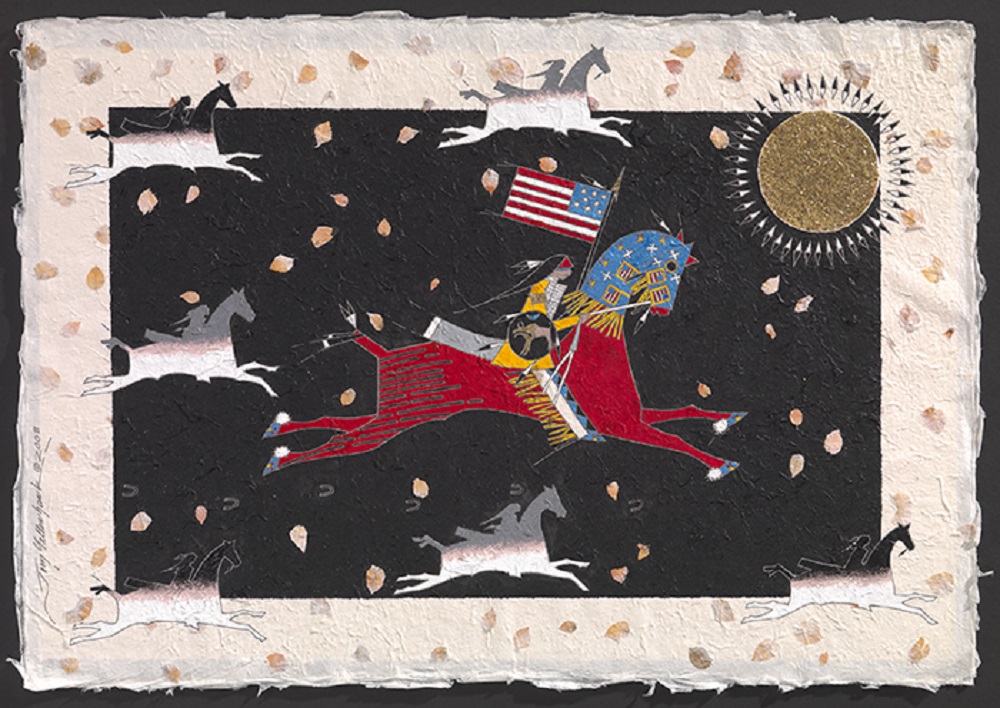
Lakota Horse

"Lakota Horse Mask,” 2008, by Jim Yellowhawk (Cheyenne River Lakota, b. 1958). South Dakota. Acrylic on paper, gold leaf. Photograph by Ernest Amoroso, NMAI. (26/7199)


When American Indians encountered horses—which some tribes call the Horse Nation—they found an ally, inspiring and useful in times of peace, and intrepid in times of war. Horses transformed Native life and became a central part of many tribal cultures.

The horse originated in the Americas more than 40 million years ago. After spreading to Asia and Europe, it became extinct in its homeland. In 1493, the horse returned to the Western Hemisphere when Columbus brought a herd of 25 on his second voyage. Back in the Americas, its native environment, the horse flourished.

This artwork is in the collection of the Smithsonian’s National Museum of the American Indian. It can be viewed in the online exhibition “Horse Nation.” And watch a video about the value of horses in Native cultures; it is part of the museum’s Native Knowledge 360º, which provides educators and students with new perspectives on Native American history and cultures. It offers educational materials, virtual student programs, and teacher training that incorporate Native narratives, more comprehensive histories, and accurate information to enlighten and inform teaching and learning about Native America.

arrow-up Back to top
Home
  • Facebook facebook
  • Instagram instagram
  • LinkedIn linkedin
  • YouTube youtube

  • Contact Us
  • Get Involved
  • Shop Online
  • Job Opportunities
  • Equal Opportunity
  • Inspector General
  • Records Requests
  • Accessibility
  • Host Your Event
  • Press Room
  • Privacy
  • Terms of Use