Skip to main content Skip to main navigation
heart-solid My Visit Donate
Home Smithsonian Institution IK development site for ODI
Press Enter to activate a submenu, down arrow to access the items and Escape to close the submenu.
    • Overview
    • Museums and Zoo
    • Entry and Guidelines
    • Museum Maps
    • Dine and Shop
    • Accessibility
    • Visiting with Kids
    • Group Visits
    • Overview
    • Exhibitions
    • Online Events
    • All Events
    • IMAX & Planetarium
    • Overview
    • Topics
    • Collections
    • Research Resources
    • Stories
    • Podcasts
    • Overview
    • For Caregivers
    • For Educators
    • For Students
    • For Academics
    • For Lifelong Learners
    • Overview
    • Become a Member
    • Renew Membership
    • Make a Gift
    • Volunteer
    • Overview
    • Our Organization
    • Our Leadership
    • Reports and Plans
    • Newsdesk
heart-solid My Visit Donate
  1. Home
  2. forward-slash
  3. Explore
  4. forward-slash
  5. Collections
  6. forward-slash
  7. Smithsonian Snapshot
  8. forward-slash
  9. Smithsonite: A Mineral Named for James Smithson

Explore

  • Overview
  • Topics
    • Art & Design
    • History & Culture
    • Science & Nature
    • Tech & Innovation
  • Collections
    • Open Access
    • Smithsonian Snapshot
    • Collection Spotlights
  • Research Resources
    • Libraries
    • Archives
  • Stories
  • Podcasts
Smithsonian Snapshot

Smithsonite: A Mineral Named for James Smithson
March 12, 2025
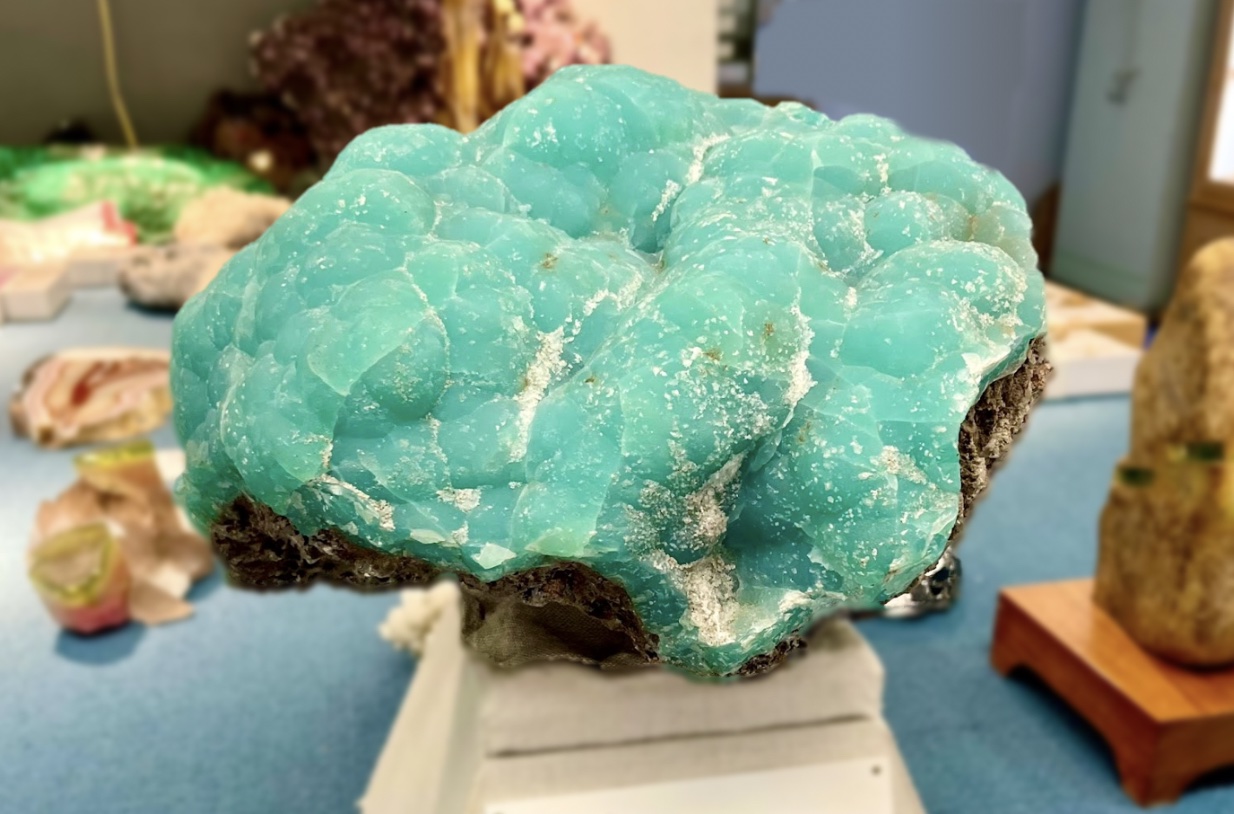
A specimen of Smithsonite

Pictured above is smithsonite, a zinc carbonate mineral that was named after James Smithson (c. 1765–1829), a British chemist, mineralogist, and the founding donor of the Smithsonian Institution.

Smithson became interested in the natural sciences during a period when chemistry was developing into a new science in the late 1700s. He focused on discovering the basic elements, and he collected mineral and ore samples from European countries.

Smithson was one of the first researchers to systematically categorize calamine—or zinc as it was later called. In 1832, three years after Smithson’s death, French mineralogist François Sulpice Beudant named the zinc carbonate mineral smithsonite after Smithson.

The Smithsonian’s National Museum of Natural History holds many smithsonite specimens from all over the world. The smithsonite specimen above is from New Mexico’s Kelly Mine, a deposit famed for producing exhibit-quality slabs of bright blue smithsonite. Smithsonite comes in a variety of colors, including greens, purplish pinks and yellows.

Smithson never set foot in the U.S., and it does not appear he corresponded with anyone in the country, so his motive to leave his estate “to the United States of America, to found at Washington, under the name of the Smithsonian Institution, an establishment for the increase and diffusion of knowledge” remains a mystery.


arrow-up Back to top
Home
  • Facebook facebook
  • Instagram instagram
  • LinkedIn linkedin
  • YouTube youtube

  • Contact Us
  • Get Involved
  • Shop Online
  • Job Opportunities
  • Equal Opportunity
  • Inspector General
  • Records Requests
  • Accessibility
  • Host Your Event
  • Press Room
  • Privacy
  • Terms of Use