
Shortsnout Scorpionfish X-Ray
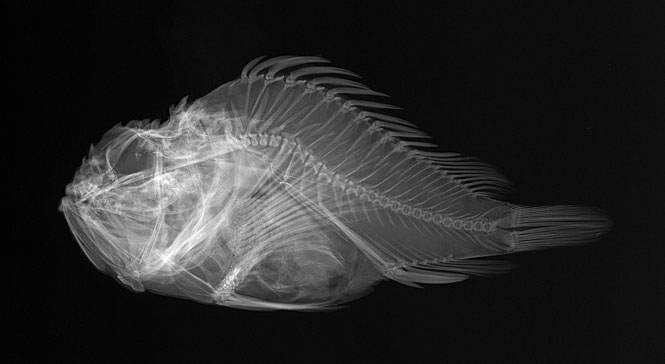
Shortsnout Scorpionfish X-Ray, 1908, Sandra J. Raredon, National Museum of Natural History
Smithsonian scientists use X-ray images like this one to gather important information about the internal biology of a fish without dissecting or in any other way altering the specimen.
This X-ray shows a Shortsnout Scorpionfish (Scorpaenopsis obtuse). It has venomous glands in the spines of the fins, which can deliver a powerful, numbing toxin. This specimen was collected in the Philippines in 1908, but it was not named as a new species until 2001.
The Smithsonian’s National Collection of Fishes at the National Museum of Natural History is the largest and most diverse collection of its kind. The collection comprises an estimated 4 million individual fish specimens representing more than 70 percent of the world’s fish species. These specimens serve as a historical record of fish biodiversity and a working reference library for scientists around the world.
All X-rays and fish photographs were taken by Sandra J. Raredon, museum specialist in the Division of Fishes at the National Museum of Natural History.