Skip to main content Skip to main navigation
heart-solid My Visit Donate
Home Smithsonian Institution IK development site for ODI
Press Enter to activate a submenu, down arrow to access the items and Escape to close the submenu.
    • Overview
    • Museums and Zoo
    • Entry and Guidelines
    • Museum Maps
    • Dine and Shop
    • Accessibility
    • Visiting with Kids
    • Group Visits
    • Overview
    • Exhibitions
    • Online Events
    • All Events
    • IMAX & Planetarium
    • Overview
    • Topics
    • Collections
    • Research Resources
    • Stories
    • Podcasts
    • Overview
    • For Caregivers
    • For Educators
    • For Students
    • For Academics
    • For Lifelong Learners
    • Overview
    • Become a Member
    • Renew Membership
    • Make a Gift
    • Volunteer
    • Overview
    • Our Organization
    • Our Leadership
    • Reports and Plans
    • Newsdesk
heart-solid My Visit Donate
  1. Home
  2. forward-slash
  3. Explore
  4. forward-slash
  5. Collections
  6. forward-slash
  7. Smithsonian Snapshot
  8. forward-slash
  9. Scarecrow Costume

Explore

  • Overview
  • Topics
    • Art & Design
    • History & Culture
    • Science & Nature
    • Tech & Innovation
  • Collections
    • Open Access
    • Smithsonian Snapshot
    • Collection Spotlights
  • Research Resources
    • Libraries
    • Archives
  • Stories
  • Podcasts
Smithsonian Snapshot

Scarecrow Costume

August 24, 2011
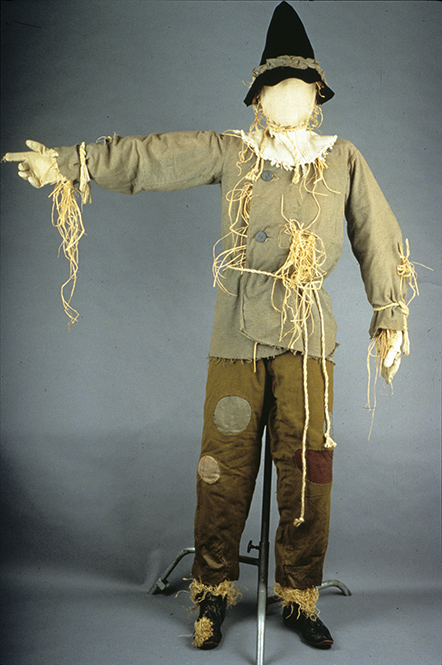
Scarecrow Costume, 1939

Scarecrow Costume, 1939, Smithsonian's National Museum of American History

On Aug. 25, 1939, “The Wizard of Oz” debuted in theaters nationwide. Ray Bolger wore this straw-stuffed patchwork costume as the Scarecrow, one of the friends who accompanied Dorothy to the Emerald City in the 1939 Technicolor film. Designed by Gilbert Adrian, MGM’s premier costume artist, the straw-stuffed clothing fit loosely enough so that Bolger could perform his comedic dance number, “If I Only Had a Brain.”

Not shown in this photo is the most troublesome part of Bolger's scarecrow outfit—a rubber face mask designed to simulate burlap. Under the hot lights on the set, the mask was stifling and it frequently had to be replaced. The mask did not last for more than a day—Bolger went through more than 40 masks during the shooting of the movie.

Gwendolyn R. Bolger, Bolger’s wife, donated this costume to the Smithsonian in 1987 with a spare bag of raffia to stuff the costume.

arrow-up Back to top
Home
  • Facebook facebook
  • Instagram instagram
  • LinkedIn linkedin
  • YouTube youtube

  • Contact Us
  • Get Involved
  • Shop Online
  • Job Opportunities
  • Equal Opportunity
  • Inspector General
  • Records Requests
  • Accessibility
  • Host Your Event
  • Press Room
  • Privacy
  • Terms of Use