Skip to main content Skip to main navigation
heart-solid My Visit Donate
Home Smithsonian Institution IK development site for ODI
Press Enter to activate a submenu, down arrow to access the items and Escape to close the submenu.
    • Overview
    • Museums and Zoo
    • Entry and Guidelines
    • Museum Maps
    • Dine and Shop
    • Accessibility
    • Visiting with Kids
    • Group Visits
    • Overview
    • Exhibitions
    • Online Events
    • All Events
    • IMAX & Planetarium
    • Overview
    • Topics
    • Collections
    • Research Resources
    • Stories
    • Podcasts
    • Overview
    • For Caregivers
    • For Educators
    • For Students
    • For Academics
    • For Lifelong Learners
    • Overview
    • Become a Member
    • Renew Membership
    • Make a Gift
    • Volunteer
    • Overview
    • Our Organization
    • Our Leadership
    • Reports and Plans
    • Newsdesk
heart-solid My Visit Donate
  1. Home
  2. forward-slash
  3. Explore
  4. forward-slash
  5. Collections
  6. forward-slash
  7. Smithsonian Snapshot
  8. forward-slash
  9. A Revolution in Tattooing

Explore

  • Overview
  • Topics
    • Art & Design
    • History & Culture
    • Science & Nature
    • Tech & Innovation
  • Collections
    • Open Access
    • Smithsonian Snapshot
    • Collection Spotlights
  • Research Resources
    • Libraries
    • Archives
  • Stories
  • Podcasts
Smithsonian Snapshot

A Revolution in Tattooing
August 20, 2020
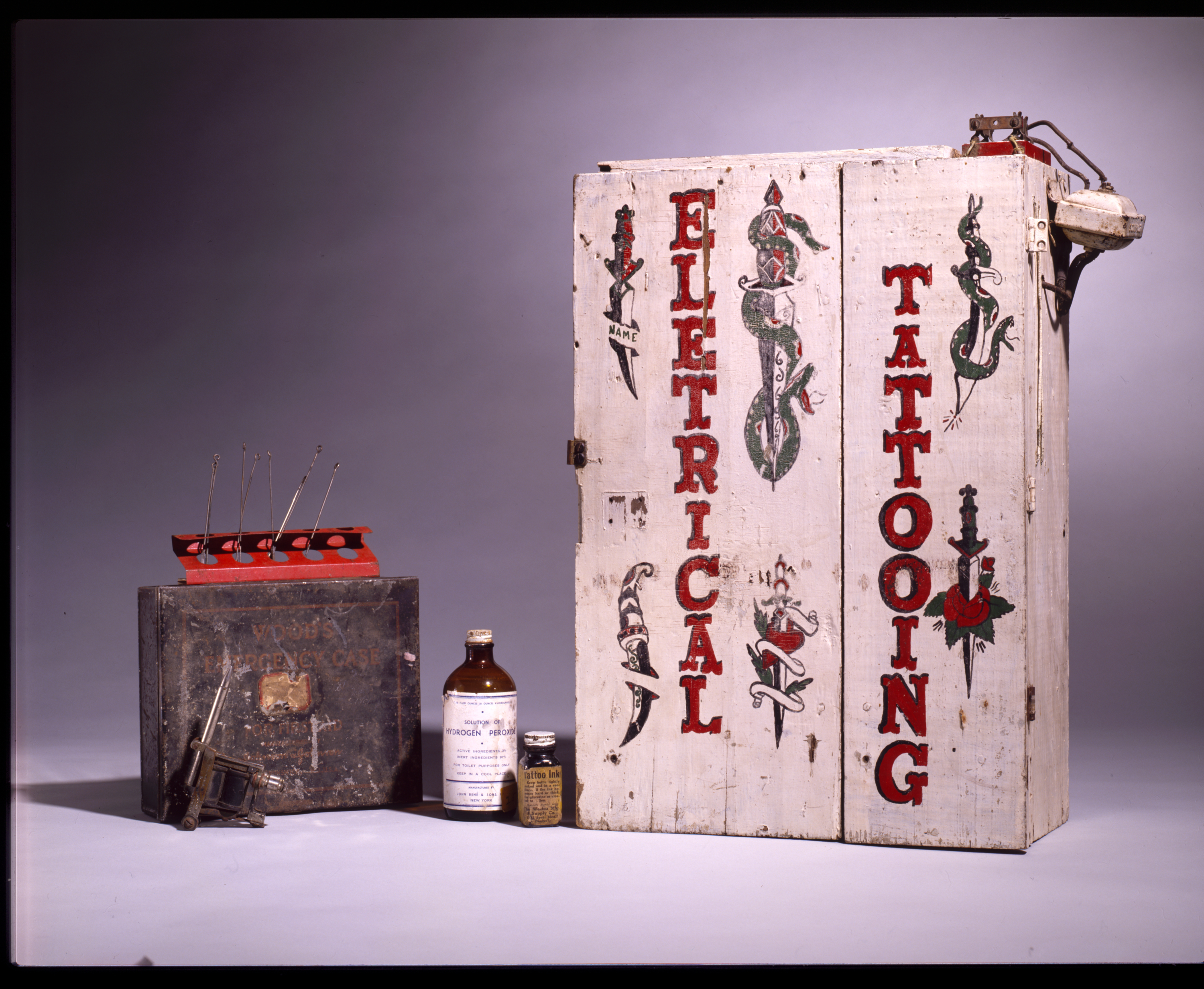
Tattoo Equipment

Smithsonian American Art Museum, gift of Herbert Waide Hemphill Jr. and museum purchase made possible by Ralph Cross Johnson.

A New York City tattoo artist, Samuel O’Reilly, was granted a patent for the first tattooing machine in 1891. By adapting Thomas Edison's design for an electric pen, O’Reilly created a tattoo machine with a reciprocating motor that powered a needle, which was faster and less painful than previous hand methods. Before this, even the most proficient tattoo artist could only puncture the skin two or three times a second compared to the tattoo machine’s 50 punctures per second.

The machine and tattoo supplies needed to be portable because early American tattoo artists traveled constantly along the eastern seaboard, selling their craft to sailors at the different ports.

This tattoo set, from the 1920s–1930s, includes a painted wood box with iron and brass trim containing electrical fittings, tattoo needles of various sizes and ink, a bottle of hydrogen peroxide, a paper card, labels, metal box and glass boxes. It is in the Smithsonian American Art Museum’s collection.

View more of the museum’s tattoo-related art, such as this 20th-century tattoo flash (“flash” refers to common tattoo designs drawn on paper or cardboard) and a tattoo flash sample book.

Read about the world’s oldest tattoos and about tattoos as an art form.

arrow-up Back to top
Home
  • Facebook facebook
  • Instagram instagram
  • LinkedIn linkedin
  • YouTube youtube

  • Contact Us
  • Get Involved
  • Shop Online
  • Job Opportunities
  • Equal Opportunity
  • Inspector General
  • Records Requests
  • Accessibility
  • Host Your Event
  • Press Room
  • Privacy
  • Terms of Use