Skip to main content Skip to main navigation
heart-solid My Visit Donate
Home Smithsonian Institution IK development site for ODI
Press Enter to activate a submenu, down arrow to access the items and Escape to close the submenu.
    • Overview
    • Museums and Zoo
    • Entry and Guidelines
    • Museum Maps
    • Dine and Shop
    • Accessibility
    • Visiting with Kids
    • Group Visits
    • Overview
    • Exhibitions
    • Online Events
    • All Events
    • IMAX & Planetarium
    • Overview
    • Topics
    • Collections
    • Research Resources
    • Stories
    • Podcasts
    • Overview
    • For Caregivers
    • For Educators
    • For Students
    • For Academics
    • For Lifelong Learners
    • Overview
    • Become a Member
    • Renew Membership
    • Make a Gift
    • Volunteer
    • Overview
    • Our Organization
    • Our Leadership
    • Reports and Plans
    • Newsdesk
heart-solid My Visit Donate
  1. Home
  2. forward-slash
  3. Explore
  4. forward-slash
  5. Collections
  6. forward-slash
  7. Smithsonian Snapshot
  8. forward-slash
  9. A Puzzling Tree

Explore

  • Overview
  • Topics
    • Art & Design
    • History & Culture
    • Science & Nature
    • Tech & Innovation
  • Collections
    • Open Access
    • Smithsonian Snapshot
    • Collection Spotlights
  • Research Resources
    • Libraries
    • Archives
  • Stories
  • Podcasts
Smithsonian Snapshot

A Puzzling Tree

September 14, 2015
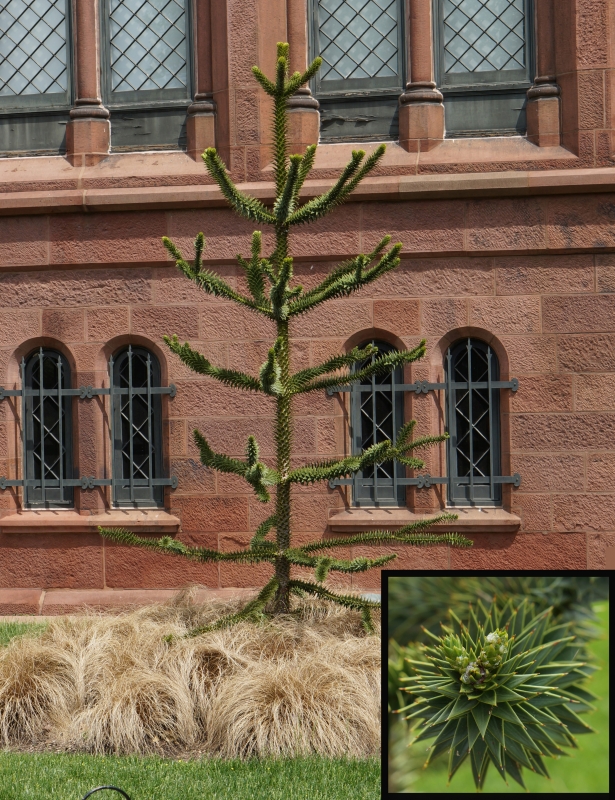
tree outside the Castle

John Gibbons / Smithsonian Institution

This monkey puzzle tree (Araucaria araucaria) is one of the stranger trees growing in the Smithsonian’s Enid A. Haupt Garden in Washington, D.C. Its triangular leaves, which cover the entire tree, both branches and trunk, are thick, tough, and scale-like, with sharp edges and tips. Each leaf can last 10 to 15 years.

The tree’s common name reportedly stems from a comment made by an Englishman in the mid-1800s. He noted that it would be a puzzle for a monkey attempting to climb such a well-armed tree. Even though there are no monkeys in the tree’s native habitat on the lower Andean slopes of Chile and Argentina, the remark caught the public’s attention and evolved into the tree’s name.

This monkey puzzle tree shares the 4.2-acre Enid A. Haupt Garden at the Smithsonian Castle with hundreds of tree and flowering plant cultivars. It is all managed and maintained by Smithsonian Gardens staff.

arrow-up Back to top
Home
  • Facebook facebook
  • Instagram instagram
  • LinkedIn linkedin
  • YouTube youtube

  • Contact Us
  • Get Involved
  • Shop Online
  • Job Opportunities
  • Equal Opportunity
  • Inspector General
  • Records Requests
  • Accessibility
  • Host Your Event
  • Press Room
  • Privacy
  • Terms of Use