Skip to main content Skip to main navigation
heart-solid My Visit Donate
Home Smithsonian Institution IK development site for ODI
Press Enter to activate a submenu, down arrow to access the items and Escape to close the submenu.
    • Overview
    • Museums and Zoo
    • Entry and Guidelines
    • Museum Maps
    • Dine and Shop
    • Accessibility
    • Visiting with Kids
    • Group Visits
    • Overview
    • Exhibitions
    • Online Events
    • All Events
    • IMAX & Planetarium
    • Overview
    • Topics
    • Collections
    • Research Resources
    • Stories
    • Podcasts
    • Overview
    • For Caregivers
    • For Educators
    • For Students
    • For Academics
    • For Lifelong Learners
    • Overview
    • Become a Member
    • Renew Membership
    • Make a Gift
    • Volunteer
    • Overview
    • Our Organization
    • Our Leadership
    • Reports and Plans
    • Newsdesk
heart-solid My Visit Donate
  1. Home
  2. forward-slash
  3. Explore
  4. forward-slash
  5. Collections
  6. forward-slash
  7. Smithsonian Snapshot
  8. forward-slash
  9. A Peony of a Different Color

Explore

  • Overview
  • Topics
    • Art & Design
    • History & Culture
    • Science & Nature
    • Tech & Innovation
  • Collections
    • Open Access
    • Smithsonian Snapshot
    • Collection Spotlights
  • Research Resources
    • Libraries
    • Archives
  • Stories
  • Podcasts
Smithsonian Snapshot

A Peony of a Different Color
June 3, 2015
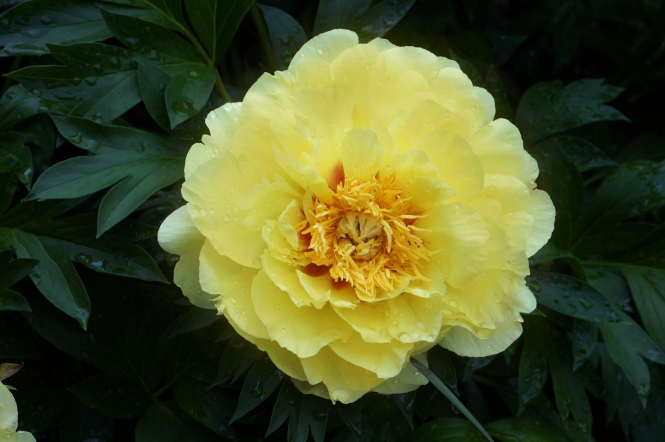
yellow bloom

John Gibbons / Smithsonian

Her name is Bartzella, and she is something of a novelty and relative newcomer in the world of peonies. She definitely stands out among the other peonies in the Smithsonian’s Mary Livingston Ripley Garden in Washington, D.C. Her top distinction is the color of her petals: yellow.

Herbaceous peonies (those that die back in the winter) have been cultivated for centuries and admired for their range of color, from crisp white to deep magenta and every shade of pink in between. One color that eluded gardeners and horticulturists, however, was yellow. But that changed in 1948 when Japanese horticulturist Toichi Itoh did what others said was impossible.

Itoh was the first to successfully hybridize herbaceous peonies with their close relative tree peonies, which, along with having woody stems and lacier foliage, can have yellow pigment for their flowers. The result: the first peonies to have an herbaceous growth cycle and have truly yellow flowers. These hybrids are known as intersectional or “Itoh” peonies.

Today there are several varieties of yellow Itoh peonies, but it is Bartzella who steals the show for a few weeks each spring in the Mary Livingston Ripley Garden. That garden is one of a dozen managed and maintained by Smithsonian Gardens staff.

arrow-up Back to top
Home
  • Facebook facebook
  • Instagram instagram
  • LinkedIn linkedin
  • YouTube youtube

  • Contact Us
  • Get Involved
  • Shop Online
  • Job Opportunities
  • Equal Opportunity
  • Inspector General
  • Records Requests
  • Accessibility
  • Host Your Event
  • Press Room
  • Privacy
  • Terms of Use