Skip to main content Skip to main navigation
heart-solid My Visit Donate
Home Smithsonian Institution IK development site for ODI
Press Enter to activate a submenu, down arrow to access the items and Escape to close the submenu.
    • Overview
    • Museums and Zoo
    • Entry and Guidelines
    • Museum Maps
    • Dine and Shop
    • Accessibility
    • Visiting with Kids
    • Group Visits
    • Overview
    • Exhibitions
    • Online Events
    • All Events
    • IMAX & Planetarium
    • Overview
    • Topics
    • Collections
    • Research Resources
    • Stories
    • Podcasts
    • Overview
    • For Caregivers
    • For Educators
    • For Students
    • For Academics
    • For Lifelong Learners
    • Overview
    • Become a Member
    • Renew Membership
    • Make a Gift
    • Volunteer
    • Overview
    • Our Organization
    • Our Leadership
    • Reports and Plans
    • Newsdesk
heart-solid My Visit Donate
  1. Home
  2. forward-slash
  3. Explore
  4. forward-slash
  5. Collections
  6. forward-slash
  7. Smithsonian Snapshot
  8. forward-slash
  9. Money With an Optimistic Message

Explore

  • Overview
  • Topics
    • Art & Design
    • History & Culture
    • Science & Nature
    • Tech & Innovation
  • Collections
    • Open Access
    • Smithsonian Snapshot
    • Collection Spotlights
  • Research Resources
    • Libraries
    • Archives
  • Stories
  • Podcasts
Smithsonian Snapshot

Money With an Optimistic Message
August 27, 2025
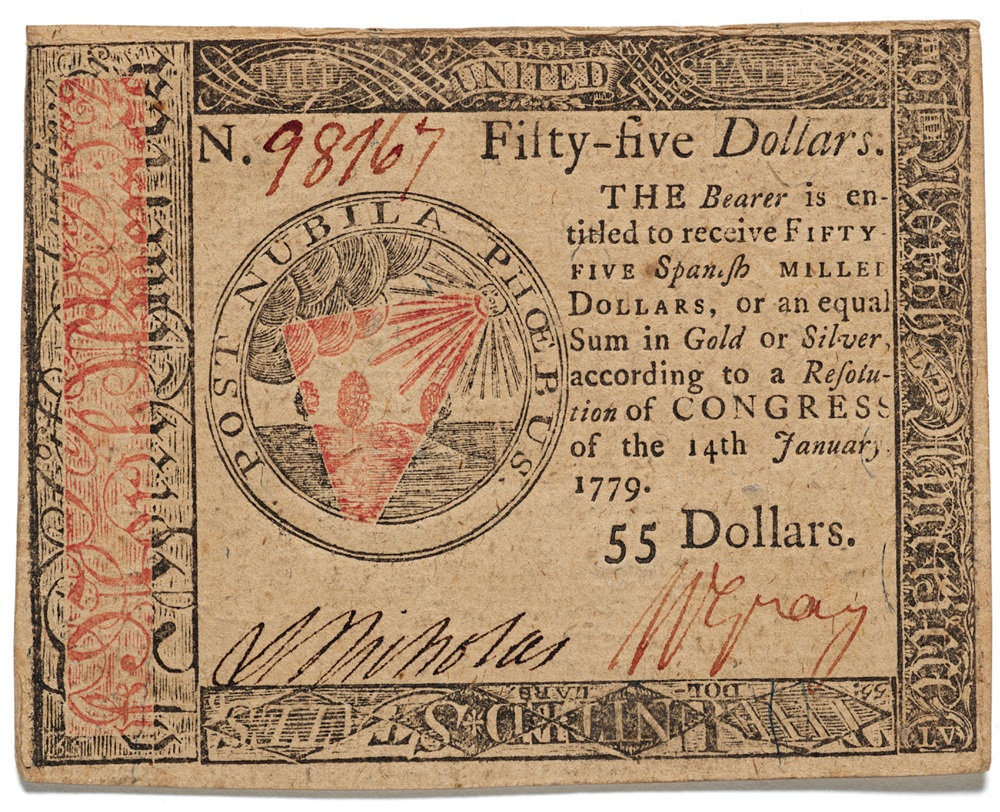
American colonial paper money from 1779

55 Dollar Note, Colonial America, 1779. Printed in Philadelphia. Donated by The Chase Manhattan Bank. Smithsonian’s National Museum of American History.

By the 1770s, paper money was central to the colonial American economy. Each of the 13 colonies produced its own in a variety of designs and denominations.

Money served as a form of communication during the Revolutionary War. Colonial notes included messages of resistance, perseverance, and optimism in a time of growing tensions between the colonists and Great Britain and during the Revolutionary War.

Pictured above, this $55 note from 1779 features an image of the sun shining in the wake of a clearing storm with the message, “after dark clouds comes the morning” in Latin. This note conveyed a message of optimism that acknowledged the challenges colonists faced—and the belief that they would prevail.

View this note and more Revolutionary money in “The Value of Money” exhibition at the Smithsonian’s National Museum of American History. Read about money in America from the 1600s to today in the online exhibition, which explores the origins, innovations, messages, artistry, and allure of money, as well as new acquisitions to the collection.

arrow-up Back to top
Home
  • Facebook facebook
  • Instagram instagram
  • LinkedIn linkedin
  • YouTube youtube

  • Contact Us
  • Get Involved
  • Shop Online
  • Job Opportunities
  • Equal Opportunity
  • Inspector General
  • Records Requests
  • Accessibility
  • Host Your Event
  • Press Room
  • Privacy
  • Terms of Use