Skip to main content Skip to main navigation
heart-solid My Visit Donate
Home Smithsonian Institution IK development site for ODI
Press Enter to activate a submenu, down arrow to access the items and Escape to close the submenu.
    • Overview
    • Museums and Zoo
    • Entry and Guidelines
    • Museum Maps
    • Dine and Shop
    • Accessibility
    • Visiting with Kids
    • Group Visits
    • Overview
    • Exhibitions
    • Online Events
    • All Events
    • IMAX & Planetarium
    • Overview
    • Topics
    • Collections
    • Research Resources
    • Stories
    • Podcasts
    • Overview
    • For Caregivers
    • For Educators
    • For Students
    • For Academics
    • For Lifelong Learners
    • Overview
    • Become a Member
    • Renew Membership
    • Make a Gift
    • Volunteer
    • Overview
    • Our Organization
    • Our Leadership
    • Reports and Plans
    • Newsdesk
heart-solid My Visit Donate
  1. Home
  2. forward-slash
  3. Explore
  4. forward-slash
  5. Collections
  6. forward-slash
  7. Smithsonian Snapshot
  8. forward-slash
  9. Martin Luther King Jr.

Explore

  • Overview
  • Topics
    • Art & Design
    • History & Culture
    • Science & Nature
    • Tech & Innovation
  • Collections
    • Open Access
    • Smithsonian Snapshot
    • Collection Spotlights
  • Research Resources
    • Libraries
    • Archives
  • Stories
  • Podcasts
Smithsonian Snapshot

Martin Luther King Jr.
January 15, 2016
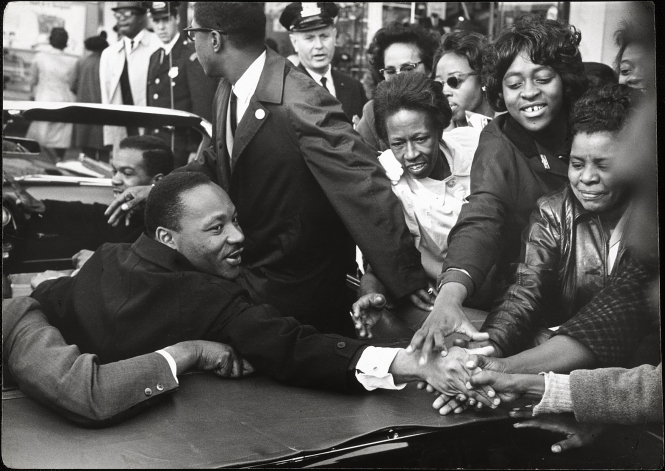
Martin Luther King Jr. by Leonard Freed, gelatin silver print, 1964

Martin Luther King Jr. by Leonard Freed, gelatin silver print, 1964. National Portrait Gallery, Smithsonian Institution

An American Civil Rights Icon Greets His Supporters

This photograph shows Martin Luther King Jr. (1929–1968) greeting supporters in Baltimore after he won the Nobel Peace Prize in 1964.

Under King’s leadership, nonviolent protest became the defining feature of the modern civil rights movement in America. King first demonstrated the efficacy of passive resistance in 1955–56 while helping to lead the prolonged bus boycott in Montgomery, Ala., that succeeded in dismantling bus segregation laws.

Fresh from the victory that brought him national recognition, King cofounded the Southern Christian Leadership Conference and took the lead in directing its civil rights initiatives. In a carefully orchestrated campaign of peaceful protest to expose and defeat racial injustice, King awakened the nation’s conscience and galvanized support for the landmark civil rights legislation of the 1960s.

Honored with the Nobel Peace Prize in 1964, he took a public stand against American involvement in the Vietnam War and also became a vocal advocate for those living in poverty. King’s words were as powerful as his deeds, and his moving and eloquent addresses, which gave hope to millions, continue to inspire people throughout the world.

arrow-up Back to top
Home
  • Facebook facebook
  • Instagram instagram
  • LinkedIn linkedin
  • YouTube youtube

  • Contact Us
  • Get Involved
  • Shop Online
  • Job Opportunities
  • Equal Opportunity
  • Inspector General
  • Records Requests
  • Accessibility
  • Host Your Event
  • Press Room
  • Privacy
  • Terms of Use