Skip to main content Skip to main navigation
heart-solid My Visit Donate
Home Smithsonian Institution IK development site for ODI
Press Enter to activate a submenu, down arrow to access the items and Escape to close the submenu.
    • Overview
    • Museums and Zoo
    • Entry and Guidelines
    • Museum Maps
    • Dine and Shop
    • Accessibility
    • Visiting with Kids
    • Group Visits
    • Overview
    • Exhibitions
    • Online Events
    • All Events
    • IMAX & Planetarium
    • Overview
    • Topics
    • Collections
    • Research Resources
    • Stories
    • Podcasts
    • Overview
    • For Caregivers
    • For Educators
    • For Students
    • For Academics
    • For Lifelong Learners
    • Overview
    • Become a Member
    • Renew Membership
    • Make a Gift
    • Volunteer
    • Overview
    • Our Organization
    • Our Leadership
    • Reports and Plans
    • Newsdesk
heart-solid My Visit Donate
  1. Home
  2. forward-slash
  3. Explore
  4. forward-slash
  5. Collections
  6. forward-slash
  7. Smithsonian Snapshot
  8. forward-slash
  9. Kiyochika: Master of the Night

Explore

  • Overview
  • Topics
    • Art & Design
    • History & Culture
    • Science & Nature
    • Tech & Innovation
  • Collections
    • Open Access
    • Smithsonian Snapshot
    • Collection Spotlights
  • Research Resources
    • Libraries
    • Archives
  • Stories
  • Podcasts
Smithsonian Snapshot

Kiyochika: Master of the Night
March 25, 2014
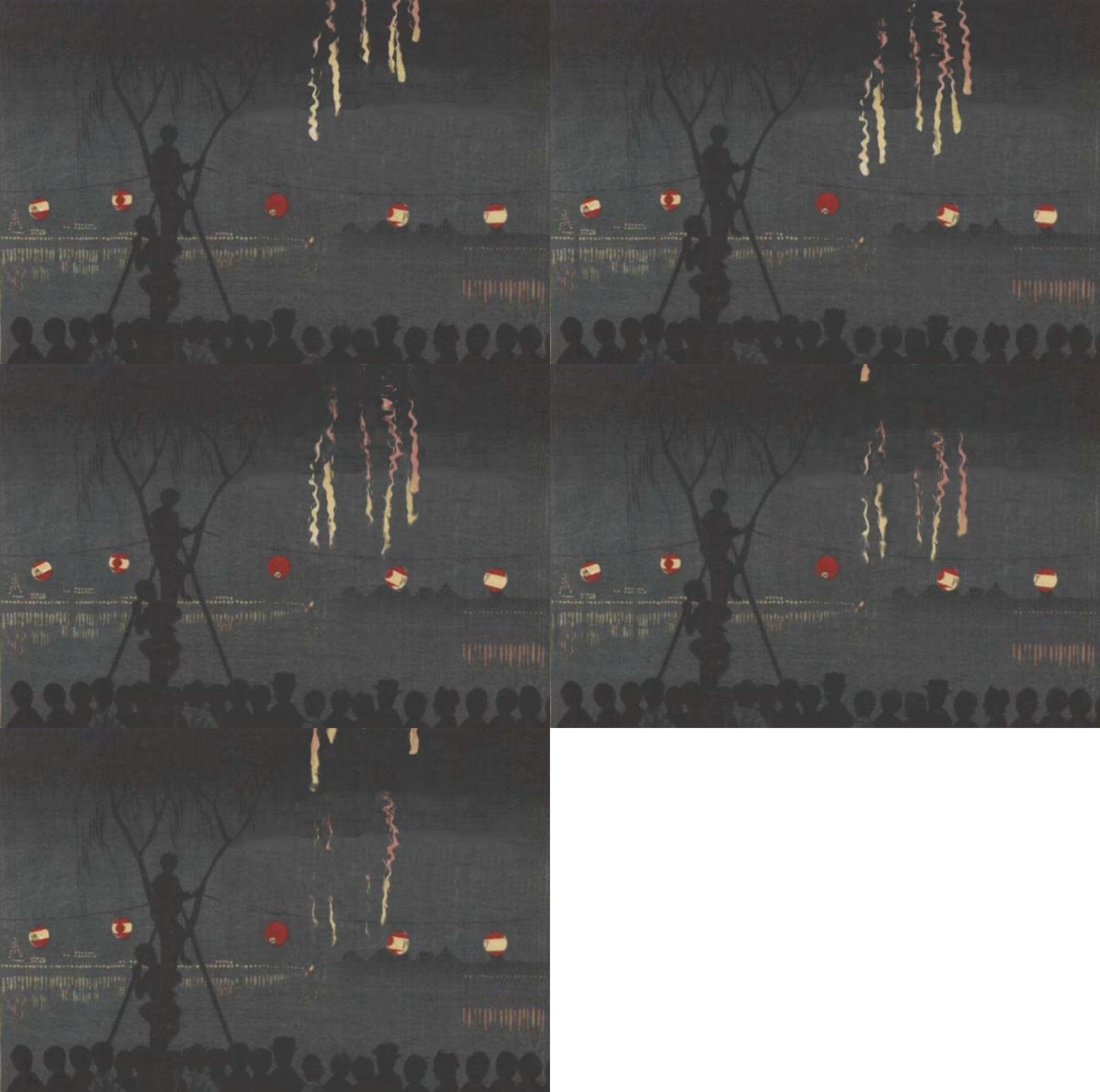
“Fireworks at Ike-no-Hata” by Kobayashi Kiyochika (Meiji era, 1881)

“Fireworks at Ike-no-Hata” by Kobayashi Kiyochika (Meiji era, 1881)

On Sept. 3, 1868, the city called Edo ceased to exist. Renamed Tokyo (“Eastern Capital”) by Japan’s new rulers, the city became the primary experiment in a national drive toward modernization. Tokyo was filled with railroads, steamships, gaslights, telegraph lines and large brick buildings—never-before-seen entities. Kobayashi Kiyochika (1847–1915) was a minor retainer of a recently deposed shogun who had followed his master into exile. When he returned to his birthplace in 1874, he found a city transformed.

Self-trained as an artist, Kiyochika set out to record his views of Tokyo. A devastating fire engulfed the city in 1881 and effectively ended the project, but the 93 prints he had completed were unlike anything previously produced by a Japanese artist.

His innovative use of color explored the possibilities of light—both man-made and natural, from dusk to dawn—and subjects drift through moody shades of gray and blue interspersed with fireworks, moonlight, gaslight and fireflies. Equally startling are his human figures. Often silhouetted, they are at once together and alone—observers, rather than actors, in an oddly quiet landscape.

This woodblock print, “Fireworks at Ike-no-Hata,” is in the collection of the Smithsonian's National Museum of Asian Art.


arrow-up Back to top
Home
  • Facebook facebook
  • Instagram instagram
  • LinkedIn linkedin
  • YouTube youtube

  • Contact Us
  • Get Involved
  • Shop Online
  • Job Opportunities
  • Equal Opportunity
  • Inspector General
  • Records Requests
  • Accessibility
  • Host Your Event
  • Press Room
  • Privacy
  • Terms of Use