Skip to main content Skip to main navigation
heart-solid My Visit Donate
Home Smithsonian Institution IK development site for ODI
Press Enter to activate a submenu, down arrow to access the items and Escape to close the submenu.
    • Overview
    • Museums and Zoo
    • Entry and Guidelines
    • Museum Maps
    • Dine and Shop
    • Accessibility
    • Visiting with Kids
    • Group Visits
    • Overview
    • Exhibitions
    • Online Events
    • All Events
    • IMAX & Planetarium
    • Overview
    • Topics
    • Collections
    • Research Resources
    • Stories
    • Podcasts
    • Overview
    • For Caregivers
    • For Educators
    • For Students
    • For Academics
    • For Lifelong Learners
    • Overview
    • Become a Member
    • Renew Membership
    • Make a Gift
    • Volunteer
    • Overview
    • Our Organization
    • Our Leadership
    • Reports and Plans
    • Newsdesk
heart-solid My Visit Donate
  1. Home
  2. forward-slash
  3. Explore
  4. forward-slash
  5. Collections
  6. forward-slash
  7. Smithsonian Snapshot
  8. forward-slash
  9. Inuit Parka

Explore

  • Overview
  • Topics
    • Art & Design
    • History & Culture
    • Science & Nature
    • Tech & Innovation
  • Collections
    • Open Access
    • Smithsonian Snapshot
    • Collection Spotlights
  • Research Resources
    • Libraries
    • Archives
  • Stories
  • Podcasts
Smithsonian Snapshot

Inuit Parka

December 28, 2010
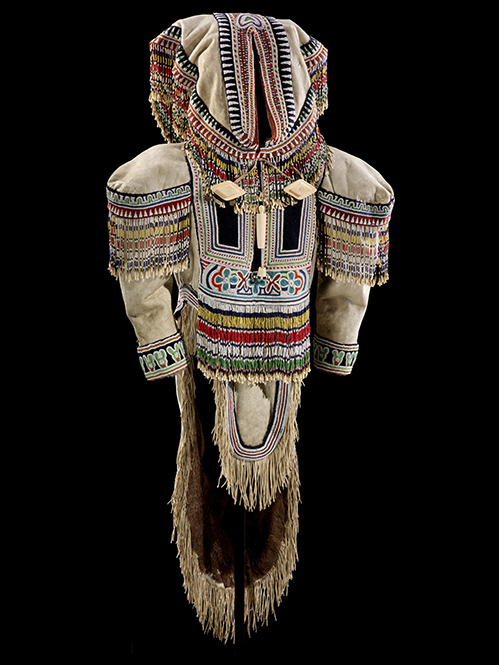
Inuit Tuilli or Woman’s Inner Parka, ca. 1925, Nunavut

Inuit Tuilli or Woman’s Inner Parka, ca. 1925, Nunavut, Smithsonian’s National Museum of the American Indian

This finely crafted and elaborately beaded Inuit tuilli, or woman’s inner parka, was made from caribou skin for the mother of a newborn baby. The mother kept her baby protected from the harsh Arctic weather in the warmth of her parka by carrying the baby in a special carrying pouch at the back of the parka. As European exploration and trade intensified in the 19th century, brightly colored glass beads, referred to as sapangat (“precious stones”), became more widely available and were used elaborately to decorate tuilli.

This object is featured in the Heye Center’s new, permanent exhibition “Infinity of Nations: Art and History in the Collections of the National Museum of the American Indian.”


arrow-up Back to top
Home
  • Facebook facebook
  • Instagram instagram
  • LinkedIn linkedin
  • YouTube youtube

  • Contact Us
  • Get Involved
  • Shop Online
  • Job Opportunities
  • Equal Opportunity
  • Inspector General
  • Records Requests
  • Accessibility
  • Host Your Event
  • Press Room
  • Privacy
  • Terms of Use