Skip to main content Skip to main navigation
heart-solid My Visit Donate
Home Smithsonian Institution IK development site for ODI
Press Enter to activate a submenu, down arrow to access the items and Escape to close the submenu.
    • Overview
    • Museums and Zoo
    • Entry and Guidelines
    • Museum Maps
    • Dine and Shop
    • Accessibility
    • Visiting with Kids
    • Group Visits
    • Overview
    • Exhibitions
    • Online Events
    • All Events
    • IMAX & Planetarium
    • Overview
    • Topics
    • Collections
    • Research Resources
    • Stories
    • Podcasts
    • Overview
    • For Caregivers
    • For Educators
    • For Students
    • For Academics
    • For Lifelong Learners
    • Overview
    • Become a Member
    • Renew Membership
    • Make a Gift
    • Volunteer
    • Overview
    • Our Organization
    • Our Leadership
    • Reports and Plans
    • Newsdesk
heart-solid My Visit Donate
  1. Home
  2. forward-slash
  3. Explore
  4. forward-slash
  5. Collections
  6. forward-slash
  7. Smithsonian Snapshot
  8. forward-slash
  9. If Dogs Could Fly

Explore

  • Overview
  • Topics
    • Art & Design
    • History & Culture
    • Science & Nature
    • Tech & Innovation
  • Collections
    • Open Access
    • Smithsonian Snapshot
    • Collection Spotlights
  • Research Resources
    • Libraries
    • Archives
  • Stories
  • Podcasts
Smithsonian Snapshot

If Dogs Could Fly

August 22, 2017
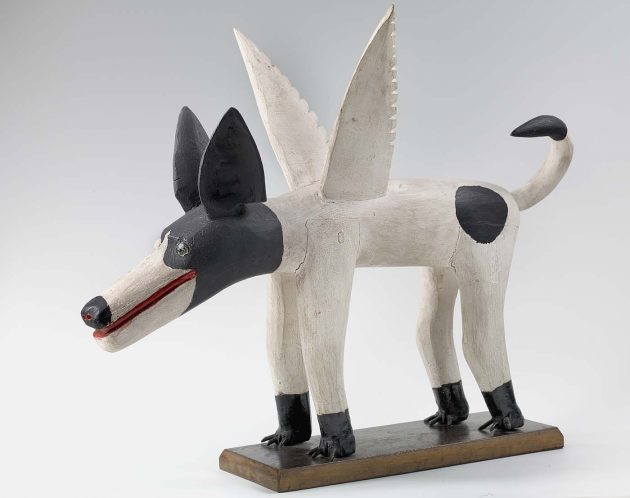
carved wooden dog with a black head, white body, and wings.


“Winged Dog.” Stephan W. Polaha. Ca. 1975. Smithsonian American Art Museum. Gift of Chuck and Jan Rosenak and museum purchase through the Luisita L. and Franz H. Denghausen Endowment.

The dog days of summer would be a bit cooler for puppies if they could be unleashed to fly around the neighborhood.

“Winged Dog,” pictured here, is one of many fanciful creatures created by Stephan W. Polaha (1891–1977) that often mashed up different figures and concepts. For this piece in the Smithsonian American Art Museum’s collection, Polaha added wings to man’s best friend.

Polaha was born in Cleveland and later moved to Reading, Pa., where he worked various jobs and lived with his sister, Mary. Both were dog lovers and avid collectors of books and other objects. Polaha often included everyday items from their home in his whimsical carvings, such as dolls and doll parts from Mary’s collection and various images of dogs. Woof!

To see more dogs in the Smithsonian’s collections, visit "Dog, Museum's Best Friend."

arrow-up Back to top
Home
  • Facebook facebook
  • Instagram instagram
  • LinkedIn linkedin
  • YouTube youtube

  • Contact Us
  • Get Involved
  • Shop Online
  • Job Opportunities
  • Equal Opportunity
  • Inspector General
  • Records Requests
  • Accessibility
  • Host Your Event
  • Press Room
  • Privacy
  • Terms of Use