Skip to main content Skip to main navigation
heart-solid My Visit Donate
Home Smithsonian Institution IK development site for ODI
Press Enter to activate a submenu, down arrow to access the items and Escape to close the submenu.
    • Overview
    • Museums and Zoo
    • Entry and Guidelines
    • Museum Maps
    • Dine and Shop
    • Accessibility
    • Visiting with Kids
    • Group Visits
    • Overview
    • Exhibitions
    • Online Events
    • All Events
    • IMAX & Planetarium
    • Overview
    • Topics
    • Collections
    • Research Resources
    • Stories
    • Podcasts
    • Overview
    • For Caregivers
    • For Educators
    • For Students
    • For Academics
    • For Lifelong Learners
    • Overview
    • Become a Member
    • Renew Membership
    • Make a Gift
    • Volunteer
    • Overview
    • Our Organization
    • Our Leadership
    • Reports and Plans
    • Newsdesk
heart-solid My Visit Donate
  1. Home
  2. forward-slash
  3. Explore
  4. forward-slash
  5. Collections
  6. forward-slash
  7. Smithsonian Snapshot
  8. forward-slash
  9. Guardians of More Than a Galaxy

Explore

  • Overview
  • Topics
    • Art & Design
    • History & Culture
    • Science & Nature
    • Tech & Innovation
  • Collections
    • Open Access
    • Smithsonian Snapshot
    • Collection Spotlights
  • Research Resources
    • Libraries
    • Archives
  • Stories
  • Podcasts
Smithsonian Snapshot

Guardians of More Than a Galaxy
June 7, 2018
guaridan figures

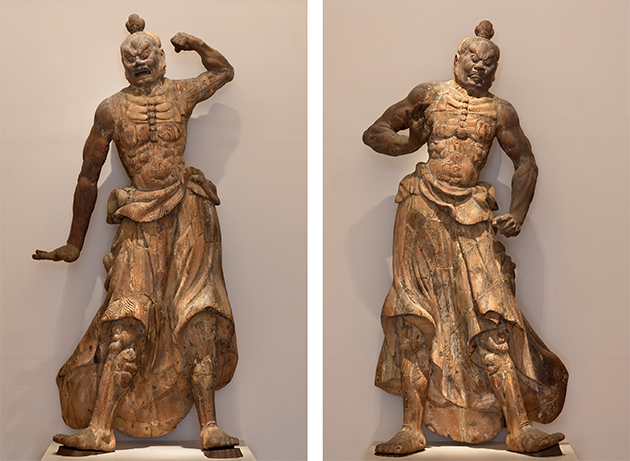
Japanese Guardian Figures, Kamakura period, 1185-1333, Japan. Smithsonian’s Freer Gallery of Art.

These two large, wooden guardian figures once kept watch over the Buddha and his followers outside Ebaradera temple in Sakai, Japan. Their size (7 feet tall), active poses and bulging muscles illustrate their power to drive away evil. The statues, on display at the Smithsonian’s Freer Gallery of Art, were carved in the likeness of the Kongorikishi, or Ni-o, benevolent kings who accompanied the Buddha and protected him during his travels in India. Their wrathful, violent appearance was believed to ward off evil spirits and protect the temple grounds from thieves.

The open-mouthed sculpture is saying “ah,” the Japanese sound for the beginning of the alphabet. The closed-mouthed guardian is saying “om,” which is the alphabet’s last sound. Together, the guardian figures are thought to demonstrate that the realm of the Buddha is infinite.

The guardian figures were originally painted red, but their color has worn off after centuries of exposure to the elements.

Not even fierce guardians can defy the weather.

For more about Buddha at the Smithsonian, go to the Smithsonian’s website to see collection images related to Buddhism or view a 3-D rendering of the ancient Chinese statue “Cosmic Buddha” in a video from Smithsonian X 3D.

arrow-up Back to top
Home
  • Facebook facebook
  • Instagram instagram
  • LinkedIn linkedin
  • YouTube youtube

  • Contact Us
  • Get Involved
  • Shop Online
  • Job Opportunities
  • Equal Opportunity
  • Inspector General
  • Records Requests
  • Accessibility
  • Host Your Event
  • Press Room
  • Privacy
  • Terms of Use