Skip to main content Skip to main navigation
heart-solid My Visit Donate
Home Smithsonian Institution IK development site for ODI
Press Enter to activate a submenu, down arrow to access the items and Escape to close the submenu.
    • Overview
    • Museums and Zoo
    • Entry and Guidelines
    • Museum Maps
    • Dine and Shop
    • Accessibility
    • Visiting with Kids
    • Group Visits
    • Overview
    • Exhibitions
    • Online Events
    • All Events
    • IMAX & Planetarium
    • Overview
    • Topics
    • Collections
    • Research Resources
    • Stories
    • Podcasts
    • Overview
    • For Caregivers
    • For Educators
    • For Students
    • For Academics
    • For Lifelong Learners
    • Overview
    • Become a Member
    • Renew Membership
    • Make a Gift
    • Volunteer
    • Overview
    • Our Organization
    • Our Leadership
    • Reports and Plans
    • Newsdesk
heart-solid My Visit Donate
  1. Home
  2. forward-slash
  3. Explore
  4. forward-slash
  5. Collections
  6. forward-slash
  7. Smithsonian Snapshot
  8. forward-slash
  9. Gnats Always Keep an Eye Out for a Good Place to Eat

Explore

  • Overview
  • Topics
    • Art & Design
    • History & Culture
    • Science & Nature
    • Tech & Innovation
  • Collections
    • Open Access
    • Smithsonian Snapshot
    • Collection Spotlights
  • Research Resources
    • Libraries
    • Archives
  • Stories
  • Podcasts
Smithsonian Snapshot

Gnats Always Keep an Eye Out for a Good Place to Eat
August 14, 2014
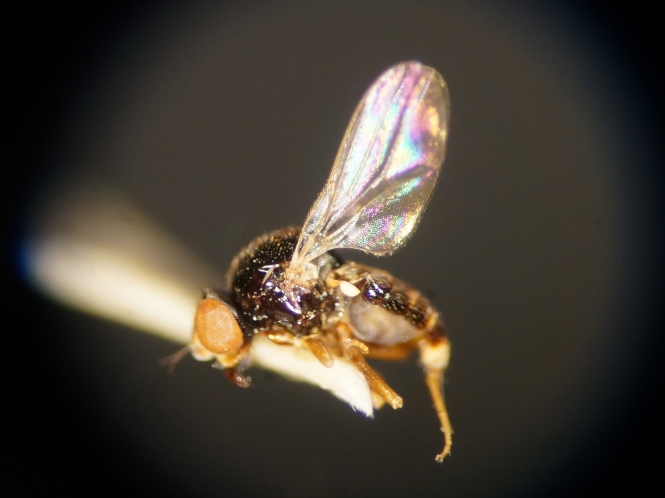
Gnat
John Gibbons, Smithsonian

As sure a sign of summer as lightning bugs but maybe not as welcome, gnats are often thought of as no more than flying specks and a nuisance. But magnified under a microscope their appearance reveals that they are “true” flies, meaning they have only two wings instead of four.

It is no coincidence that these tiny pests swarm around people’s faces and often end up in their eyes. These non-biting flies, no bigger than a few grains of salt, are attracted to fluids secreted by your eyes—in fact, they are also known as “eye gnats” or “eye flies.”

There are hundreds of gnat species worldwide, but Liohippelates pusio (pictured here) is one of the more common ones in the U.S., especially in the southeastern states where there is loose sandy soil for the gnats to lay their eggs in. And while a gnat’s life cycle can be as short as 11 days, that does not guarantee relief from these persistent pests—they can have multiple generations in one season.

arrow-up Back to top
Home
  • Facebook facebook
  • Instagram instagram
  • LinkedIn linkedin
  • YouTube youtube

  • Contact Us
  • Get Involved
  • Shop Online
  • Job Opportunities
  • Equal Opportunity
  • Inspector General
  • Records Requests
  • Accessibility
  • Host Your Event
  • Press Room
  • Privacy
  • Terms of Use