Skip to main content Skip to main navigation
heart-solid My Visit Donate
Home Smithsonian Institution IK development site for ODI
Press Enter to activate a submenu, down arrow to access the items and Escape to close the submenu.
    • Overview
    • Museums and Zoo
    • Entry and Guidelines
    • Museum Maps
    • Dine and Shop
    • Accessibility
    • Visiting with Kids
    • Group Visits
    • Overview
    • Exhibitions
    • Online Events
    • All Events
    • IMAX & Planetarium
    • Overview
    • Topics
    • Collections
    • Research Resources
    • Stories
    • Podcasts
    • Overview
    • For Caregivers
    • For Educators
    • For Students
    • For Academics
    • For Lifelong Learners
    • Overview
    • Become a Member
    • Renew Membership
    • Make a Gift
    • Volunteer
    • Overview
    • Our Organization
    • Our Leadership
    • Reports and Plans
    • Newsdesk
heart-solid My Visit Donate
  1. Home
  2. forward-slash
  3. Explore
  4. forward-slash
  5. Collections
  6. forward-slash
  7. Smithsonian Snapshot
  8. forward-slash
  9. The Elusive Furry Pink Fairy Armadillo

Explore

  • Overview
  • Topics
    • Art & Design
    • History & Culture
    • Science & Nature
    • Tech & Innovation
  • Collections
    • Open Access
    • Smithsonian Snapshot
    • Collection Spotlights
  • Research Resources
    • Libraries
    • Archives
  • Stories
  • Podcasts
Smithsonian Snapshot

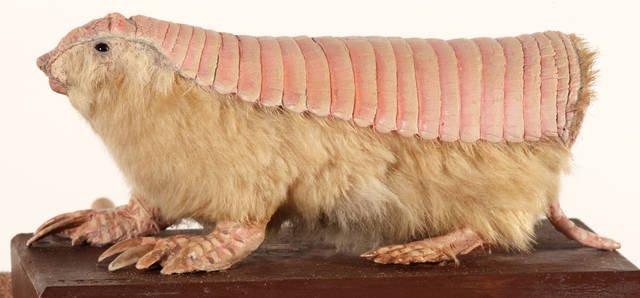
The Elusive Furry Pink Fairy Armadillo
August 1, 2019
Armadillo with a pink shell back and furry body.

Smithsonian’s National Museum of Natural History, Department of Vertebrate Zoology, Division of Mammals

Although this guy looks quite large, the pink fairy armadillo only grows to about 6 inches long. Found only in central Argentina, this is the smallest armadillo species in the world.

Like other armadillos, pink fairy armadillos have a shell (carapace), but it’s softer, thinner and more flexible and  covers about half their body. The shell’s pink color comes from all the blood vessels close to its surface. The armadillos’ fur helps them keep warm as they have low body temperatures and low metabolic rates.

Pink fairy armadillos are elusive and rarely seen—they are nocturnal, spending much time burrowing underground, and as a result, not much is known about their behavior and biology. Because they are elusive and can’t survive outside of their habitat, they are difficult to study.

For more about the pink fairy armadillo, see the Encyclopedia of Life. To learn about the armadillos at the Smithsonian’s National Zoo, see the la plata three banded armadillo and the screaming hairy armadillo.

arrow-up Back to top
Home
  • Facebook facebook
  • Instagram instagram
  • LinkedIn linkedin
  • YouTube youtube

  • Contact Us
  • Get Involved
  • Shop Online
  • Job Opportunities
  • Equal Opportunity
  • Inspector General
  • Records Requests
  • Accessibility
  • Host Your Event
  • Press Room
  • Privacy
  • Terms of Use