Skip to main content Skip to main navigation
heart-solid My Visit Donate
Home Smithsonian Institution IK development site for ODI
Press Enter to activate a submenu, down arrow to access the items and Escape to close the submenu.
    • Overview
    • Museums and Zoo
    • Entry and Guidelines
    • Museum Maps
    • Dine and Shop
    • Accessibility
    • Visiting with Kids
    • Group Visits
    • Overview
    • Exhibitions
    • Online Events
    • All Events
    • IMAX & Planetarium
    • Overview
    • Topics
    • Collections
    • Research Resources
    • Stories
    • Podcasts
    • Overview
    • For Caregivers
    • For Educators
    • For Students
    • For Academics
    • For Lifelong Learners
    • Overview
    • Become a Member
    • Renew Membership
    • Make a Gift
    • Volunteer
    • Overview
    • Our Organization
    • Our Leadership
    • Reports and Plans
    • Newsdesk
heart-solid My Visit Donate
  1. Home
  2. forward-slash
  3. Explore
  4. forward-slash
  5. Collections
  6. forward-slash
  7. Smithsonian Snapshot
  8. forward-slash
  9. Eleanor Roosevelt at Tuskegee

Explore

  • Overview
  • Topics
    • Art & Design
    • History & Culture
    • Science & Nature
    • Tech & Innovation
  • Collections
    • Open Access
    • Smithsonian Snapshot
    • Collection Spotlights
  • Research Resources
    • Libraries
    • Archives
  • Stories
  • Podcasts
Smithsonian Snapshot

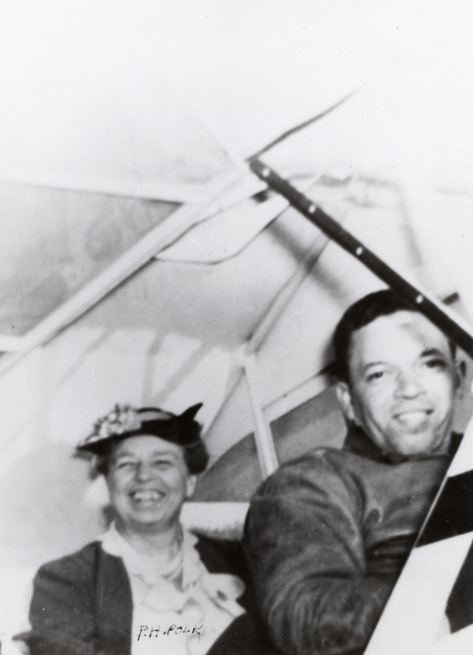
Eleanor Roosevelt at Tuskegee
March 22, 2011
Eleanor Roosevelt at Tuskegee, 1941

Eleanor Roosevelt at Tuskegee, 1941, Smithsonian’s National Air and Space Museum

The historic flight of the Wright brothers in 1903 sparked a universal enthusiasm for flying. But as in most areas of life, formidable obstacles and discrimination faced African Americans who had dreams of flying.

In March 1941, the 99th Pursuit (later Fighter) Squadron—an all-African American unit—was activated by the U.S. Army Air Corps. This marked the long-awaited entry of African Americans into military aviation. The newly established Tuskegee Army Air Field at Tuskegee, Ala., became the focal point for training of African American military pilots during World War II.

In this 1941 photo, First Lady Eleanor Roosevelt flew with pilot C. Alfred “Chief” Anderson, primary flight instructor at the Tuskegee Institute, during a visit to the flying school. Roosevelt’s willingness to fly with an African American pilot had great symbolic value and brought visibility and support to Tuskegee’s pilot-training program.

arrow-up Back to top
Home
  • Facebook facebook
  • Instagram instagram
  • LinkedIn linkedin
  • YouTube youtube

  • Contact Us
  • Get Involved
  • Shop Online
  • Job Opportunities
  • Equal Opportunity
  • Inspector General
  • Records Requests
  • Accessibility
  • Host Your Event
  • Press Room
  • Privacy
  • Terms of Use