Skip to main content Skip to main navigation
heart-solid My Visit Donate
Home Smithsonian Institution IK development site for ODI
Press Enter to activate a submenu, down arrow to access the items and Escape to close the submenu.
    • Overview
    • Museums and Zoo
    • Entry and Guidelines
    • Museum Maps
    • Dine and Shop
    • Accessibility
    • Visiting with Kids
    • Group Visits
    • Overview
    • Exhibitions
    • Online Events
    • All Events
    • IMAX & Planetarium
    • Overview
    • Topics
    • Collections
    • Research Resources
    • Stories
    • Podcasts
    • Overview
    • For Caregivers
    • For Educators
    • For Students
    • For Academics
    • For Lifelong Learners
    • Overview
    • Become a Member
    • Renew Membership
    • Make a Gift
    • Volunteer
    • Overview
    • Our Organization
    • Our Leadership
    • Reports and Plans
    • Newsdesk
heart-solid My Visit Donate
  1. Home
  2. forward-slash
  3. Explore
  4. forward-slash
  5. Collections
  6. forward-slash
  7. Smithsonian Snapshot
  8. forward-slash
  9. Hello There, Mr. Cone-Headed Katydid

Explore

  • Overview
  • Topics
    • Art & Design
    • History & Culture
    • Science & Nature
    • Tech & Innovation
  • Collections
    • Open Access
    • Smithsonian Snapshot
    • Collection Spotlights
  • Research Resources
    • Libraries
    • Archives
  • Stories
  • Podcasts
Smithsonian Snapshot

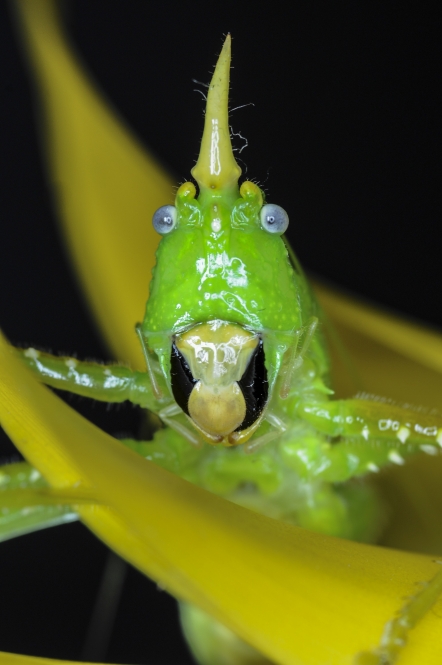
Hello There, Mr. Cone-Headed Katydid
July 29, 2014
cone-headed green katydid

Rosa Pineda, Smithsonian’s National Museum of Natural History

Looking like a character from a classic Saturday Night Live skit, this cone-headed katydid (Copiphora rhinoceros) unsurprisingly gets its name from its pointy-shaped head.

These fascinating insects are native to Central America, measure from 3 to 4 inches in length, and have an oversized jaw. Because they are omnivorous, they eat plants and fruits and supplement their diet with insects like crickets and mealworms. This is where their powerful jaws come in handy.

Cone-headed katydids may be small but do not be fooled; if disturbed, they are apt to give you a big chomp!

Find out more about this katydid and explore the vast collections of the Smithsonian’s National Museum of Natural History by visiting the Q?rius website.

arrow-up Back to top
Home
  • Facebook facebook
  • Instagram instagram
  • LinkedIn linkedin
  • YouTube youtube

  • Contact Us
  • Get Involved
  • Shop Online
  • Job Opportunities
  • Equal Opportunity
  • Inspector General
  • Records Requests
  • Accessibility
  • Host Your Event
  • Press Room
  • Privacy
  • Terms of Use