Skip to main content Skip to main navigation
heart-solid My Visit Donate
Home Smithsonian Institution IK development site for ODI
Press Enter to activate a submenu, down arrow to access the items and Escape to close the submenu.
    • Overview
    • Museums and Zoo
    • Entry and Guidelines
    • Museum Maps
    • Dine and Shop
    • Accessibility
    • Visiting with Kids
    • Group Visits
    • Overview
    • Exhibitions
    • Online Events
    • All Events
    • IMAX & Planetarium
    • Overview
    • Topics
    • Collections
    • Research Resources
    • Stories
    • Podcasts
    • Overview
    • For Caregivers
    • For Educators
    • For Students
    • For Academics
    • For Lifelong Learners
    • Overview
    • Become a Member
    • Renew Membership
    • Make a Gift
    • Volunteer
    • Overview
    • Our Organization
    • Our Leadership
    • Reports and Plans
    • Newsdesk
heart-solid My Visit Donate
  1. Home
  2. forward-slash
  3. Explore
  4. forward-slash
  5. Collections
  6. forward-slash
  7. Smithsonian Snapshot
  8. forward-slash
  9. Chigusa and the Art of Tea

Explore

  • Overview
  • Topics
    • Art & Design
    • History & Culture
    • Science & Nature
    • Tech & Innovation
  • Collections
    • Open Access
    • Smithsonian Snapshot
    • Collection Spotlights
  • Research Resources
    • Libraries
    • Archives
  • Stories
  • Podcasts
Smithsonian Snapshot

Chigusa and the Art of Tea
July 7, 2014
The Art of Tea

Arthur M. Sackler Gallery

The power of seeing, the power of owning, the power of naming, the power of displaying, the power of writing: Japanese collectors have long engaged with objects through the formalized tea presentation called chanoyu. They gave added distinction to stellar tea-leaf storage jars by awarding them personal names and adorning them with precious textiles.

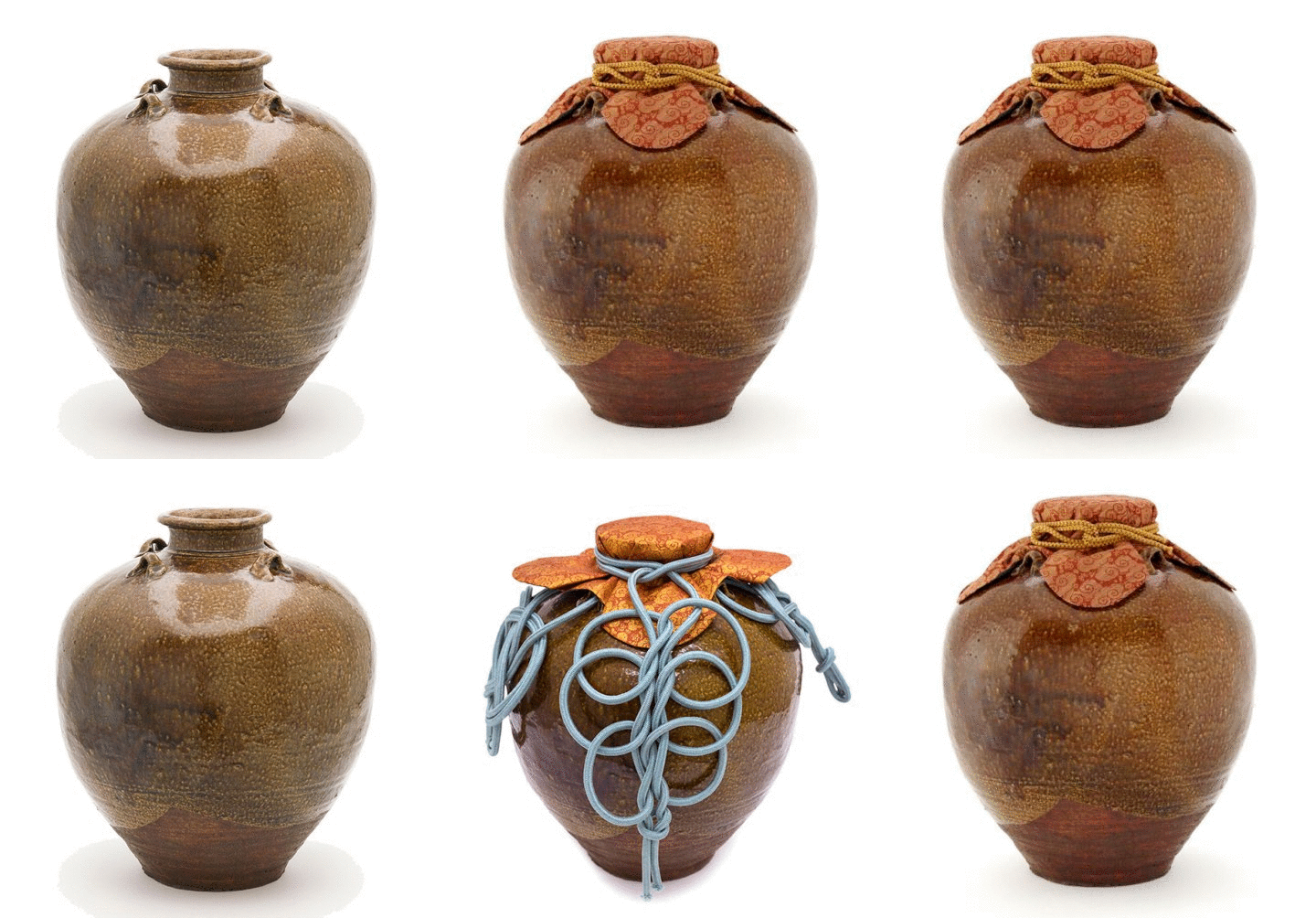
This powerful process of seeing and naming created the tea-leaf storage jar named Chigusa. It transformed an imported Chinese jar from a practical container into a vessel worthy of display, ornament and contemplation, although its practicality did not cease to be important. Remarkably, diaries kept by 16th-century tea participants record in great detail what they admired when viewing Chigusa. The diaries allow us to see the jar through the eyes of these tea men.

According to the tea diaries, when Chigusa was displayed for guests in the tearoom, it was dressed in ornamental silks of specified types—a mouth cover made of antique Chinese fabric and a net bag that enclosed the jar’s body. In later periods, sets of thick silk cords were added. These high-quality accessories were chosen to honor Chigusa’s prominent status.

The exhibition “Chigusa and the Art of Tea” is at the Smithsonian’s Arthur M. Sackler Gallery through July 27, 2014.

arrow-up Back to top
Home
  • Facebook facebook
  • Instagram instagram
  • LinkedIn linkedin
  • YouTube youtube

  • Contact Us
  • Get Involved
  • Shop Online
  • Job Opportunities
  • Equal Opportunity
  • Inspector General
  • Records Requests
  • Accessibility
  • Host Your Event
  • Press Room
  • Privacy
  • Terms of Use