Skip to main content Skip to main navigation
heart-solid My Visit Donate
Home Smithsonian Institution IK development site for ODI
Press Enter to activate a submenu, down arrow to access the items and Escape to close the submenu.
    • Overview
    • Museums and Zoo
    • Entry and Guidelines
    • Museum Maps
    • Dine and Shop
    • Accessibility
    • Visiting with Kids
    • Group Visits
    • Overview
    • Exhibitions
    • Online Events
    • All Events
    • IMAX & Planetarium
    • Overview
    • Topics
    • Collections
    • Research Resources
    • Stories
    • Podcasts
    • Overview
    • For Caregivers
    • For Educators
    • For Students
    • For Academics
    • For Lifelong Learners
    • Overview
    • Become a Member
    • Renew Membership
    • Make a Gift
    • Volunteer
    • Overview
    • Our Organization
    • Our Leadership
    • Reports and Plans
    • Newsdesk
heart-solid My Visit Donate
  1. Home
  2. forward-slash
  3. Explore
  4. forward-slash
  5. Collections
  6. forward-slash
  7. Smithsonian Snapshot
  8. forward-slash
  9. Black-footed Ferret

Explore

  • Overview
  • Topics
    • Art & Design
    • History & Culture
    • Science & Nature
    • Tech & Innovation
  • Collections
    • Open Access
    • Smithsonian Snapshot
    • Collection Spotlights
  • Research Resources
    • Libraries
    • Archives
  • Stories
  • Podcasts
Smithsonian Snapshot

Black-footed Ferret

April 6, 2017
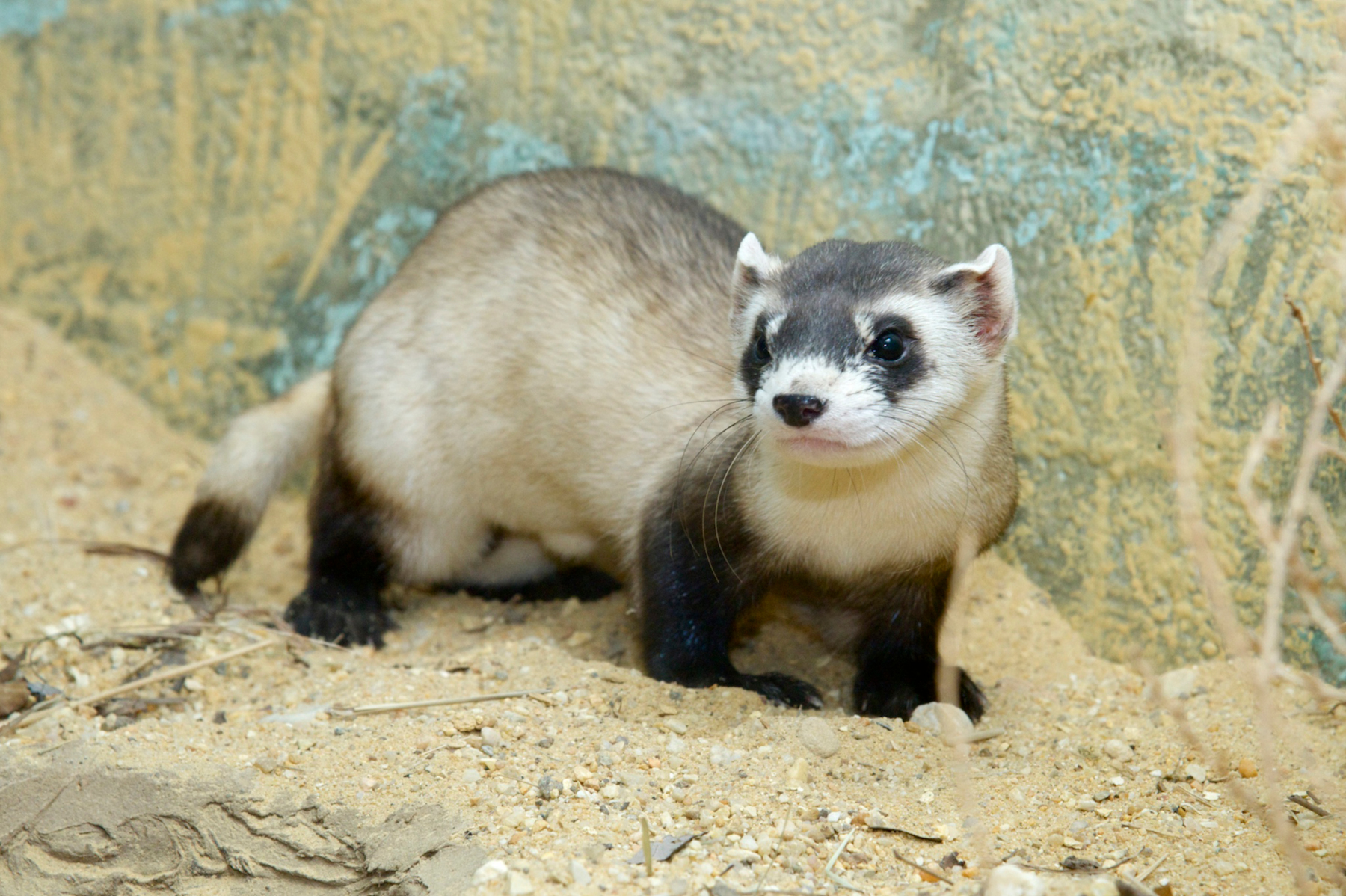
Close-up of black-footed ferret

Smithsonian's National Zoological Park

The Adorable Face of Conservation Success

Playful and oh-so-cute, black-footed ferrets are North America’s only native ferret species, which once ranged throughout the North American Great Plains. They were thought to be extinct until a small population was discovered in 1981, and the last remaining wild animals were caught to establish a breeding center in Wyoming. The recovery of the species started with just 18 animals. All black-footed ferrets alive today are related to those animals.

In 1988, the Smithsonian’s National Zoo was the first to receive offspring from those 18 and begin breeding black-footed ferrets outside of Wyoming. Since then, 726 black-footed ferrets have been born at the Smithsonian Conservation Biology Institute (SCBI) in Front Royal, Virginia.

Working with the U.S. Fish and Wildlife Service, SCBI’s black-footed ferret breeding program also reintroduces ferrets back into the wild. Several hundred ferrets born at SCBI have been reintroduced to the wild.

The ongoing recovery of the black-footed ferret is one of SCBI’s most successful conservation efforts. This and many other conservation success stories will be shared during the Earth Optimism Summit, April 21–23. Convened by the Smithsonian, the summit will highlight what is working in conservation and how to scale up and replicate it. The Washington, D.C., event will feature more than 150 scientists, thought leaders, philanthropists, conservationists and civic leaders.

arrow-up Back to top
Home
  • Facebook facebook
  • Instagram instagram
  • LinkedIn linkedin
  • YouTube youtube

  • Contact Us
  • Get Involved
  • Shop Online
  • Job Opportunities
  • Equal Opportunity
  • Inspector General
  • Records Requests
  • Accessibility
  • Host Your Event
  • Press Room
  • Privacy
  • Terms of Use