Skip to main content Skip to main navigation
heart-solid My Visit Donate
Home Smithsonian Institution IK development site for ODI
Press Enter to activate a submenu, down arrow to access the items and Escape to close the submenu.
    • Overview
    • Museums and Zoo
    • Entry and Guidelines
    • Museum Maps
    • Dine and Shop
    • Accessibility
    • Visiting with Kids
    • Group Visits
    • Overview
    • Exhibitions
    • Online Events
    • All Events
    • IMAX & Planetarium
    • Overview
    • Topics
    • Collections
    • Research Resources
    • Stories
    • Podcasts
    • Overview
    • For Caregivers
    • For Educators
    • For Students
    • For Academics
    • For Lifelong Learners
    • Overview
    • Become a Member
    • Renew Membership
    • Make a Gift
    • Volunteer
    • Overview
    • Our Organization
    • Our Leadership
    • Reports and Plans
    • Newsdesk
heart-solid My Visit Donate
  1. Home
  2. forward-slash
  3. Explore
  4. forward-slash
  5. Collections
  6. forward-slash
  7. Smithsonian Snapshot
  8. forward-slash
  9. Billions and Billions of Periodical Cicadas

Explore

  • Overview
  • Topics
    • Art & Design
    • History & Culture
    • Science & Nature
    • Tech & Innovation
  • Collections
    • Open Access
    • Smithsonian Snapshot
    • Collection Spotlights
  • Research Resources
    • Libraries
    • Archives
  • Stories
  • Podcasts
Smithsonian Snapshot

Billions and Billions of Periodical Cicadas
April 19, 2024
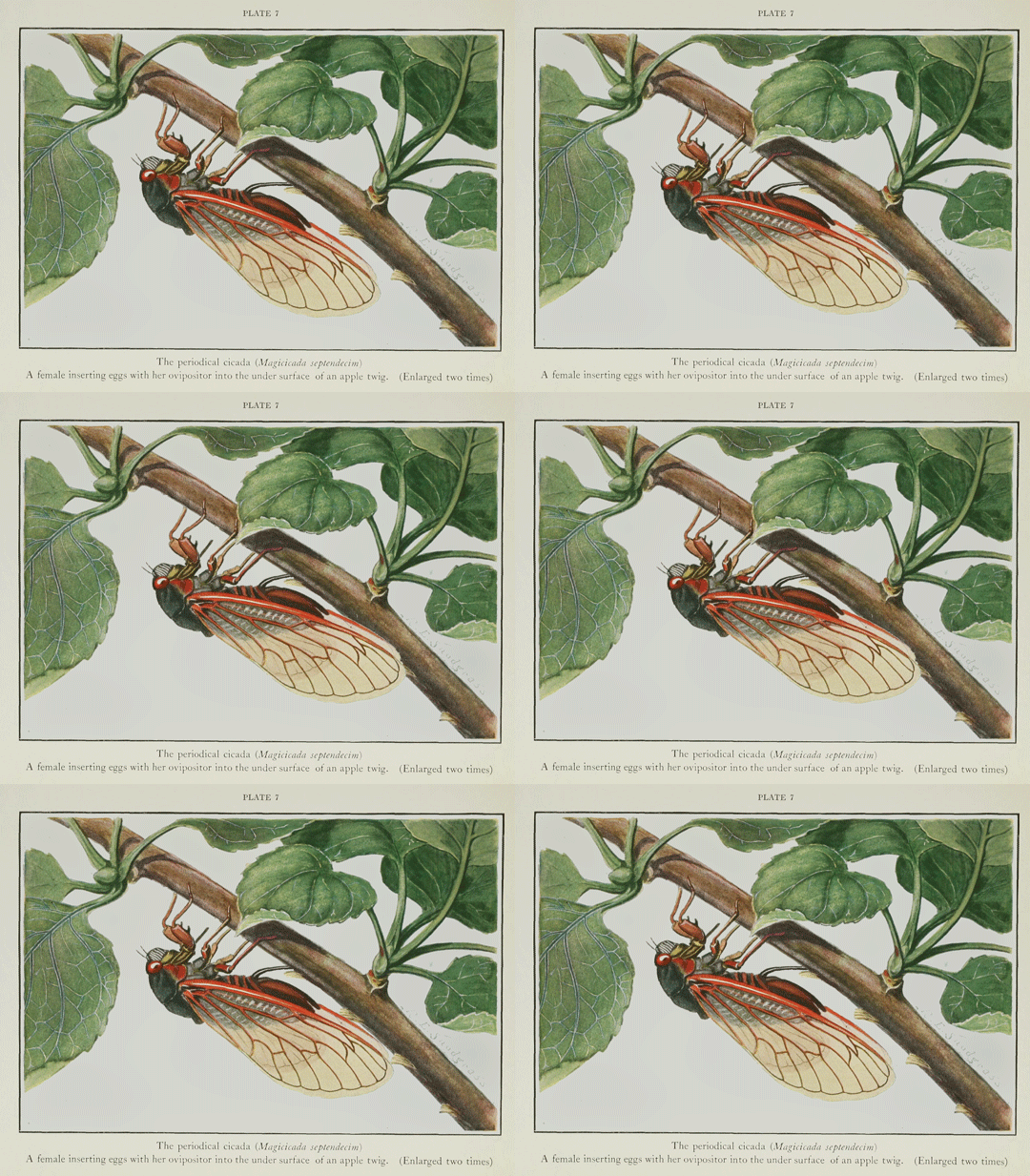
drawing of cicada

Image from Insects, Their Ways and Means of Living, by Robert E. Snodgrass (1930), vol. 5, Smithsonian Scientific Series, Biodiversity Heritage Library.

When soil temperatures under the ground reach a balmy 64 degrees Fahrenheit, periodical cicadas emerge in the U.S. They tend to do it in groups—whole regions containing billions of cicadas are synchronized in 17- or 13-year cycles.

In 2024, two broods of cicadas will emerge at the same time. The last time this happened was 1803 and Thomas Jefferson was President. Brood XIX are 13-year cicadas and will appear in Georgia and the Southeast. Brood XIII, 17-year cicadas, will surface in Illinois.

Find out more about cicadas from the Encyclopedia of Life and this educational resource from the Smithsonian’s National Museum of Natural History and see more images at Smithsonian Libraries and Archives. Listen to the "Ode to Cicadas" podcast episode on the emergence of Brood X and discover cicadas in the Smithsonian's collections.

arrow-up Back to top
Home
  • Facebook facebook
  • Instagram instagram
  • LinkedIn linkedin
  • YouTube youtube

  • Contact Us
  • Get Involved
  • Shop Online
  • Job Opportunities
  • Equal Opportunity
  • Inspector General
  • Records Requests
  • Accessibility
  • Host Your Event
  • Press Room
  • Privacy
  • Terms of Use