Skip to main content Skip to main navigation
heart-solid My Visit Donate
Home Smithsonian Institution IK development site for ODI
Press Enter to activate a submenu, down arrow to access the items and Escape to close the submenu.
    • Overview
    • Museums and Zoo
    • Entry and Guidelines
    • Museum Maps
    • Dine and Shop
    • Accessibility
    • Visiting with Kids
    • Group Visits
    • Overview
    • Exhibitions
    • Online Events
    • All Events
    • IMAX & Planetarium
    • Overview
    • Topics
    • Collections
    • Research Resources
    • Stories
    • Podcasts
    • Overview
    • For Caregivers
    • For Educators
    • For Students
    • For Academics
    • For Lifelong Learners
    • Overview
    • Become a Member
    • Renew Membership
    • Make a Gift
    • Volunteer
    • Overview
    • Our Organization
    • Our Leadership
    • Reports and Plans
    • Newsdesk
heart-solid My Visit Donate
  1. Home
  2. forward-slash
  3. Explore
  4. forward-slash
  5. Collections
  6. forward-slash
  7. Smithsonian Snapshot
  8. forward-slash
  9. The Beauty of Broken Objects

Explore

  • Overview
  • Topics
    • Art & Design
    • History & Culture
    • Science & Nature
    • Tech & Innovation
  • Collections
    • Open Access
    • Smithsonian Snapshot
    • Collection Spotlights
  • Research Resources
    • Libraries
    • Archives
  • Stories
  • Podcasts
Smithsonian Snapshot

The Beauty of Broken Objects
August 7, 2020
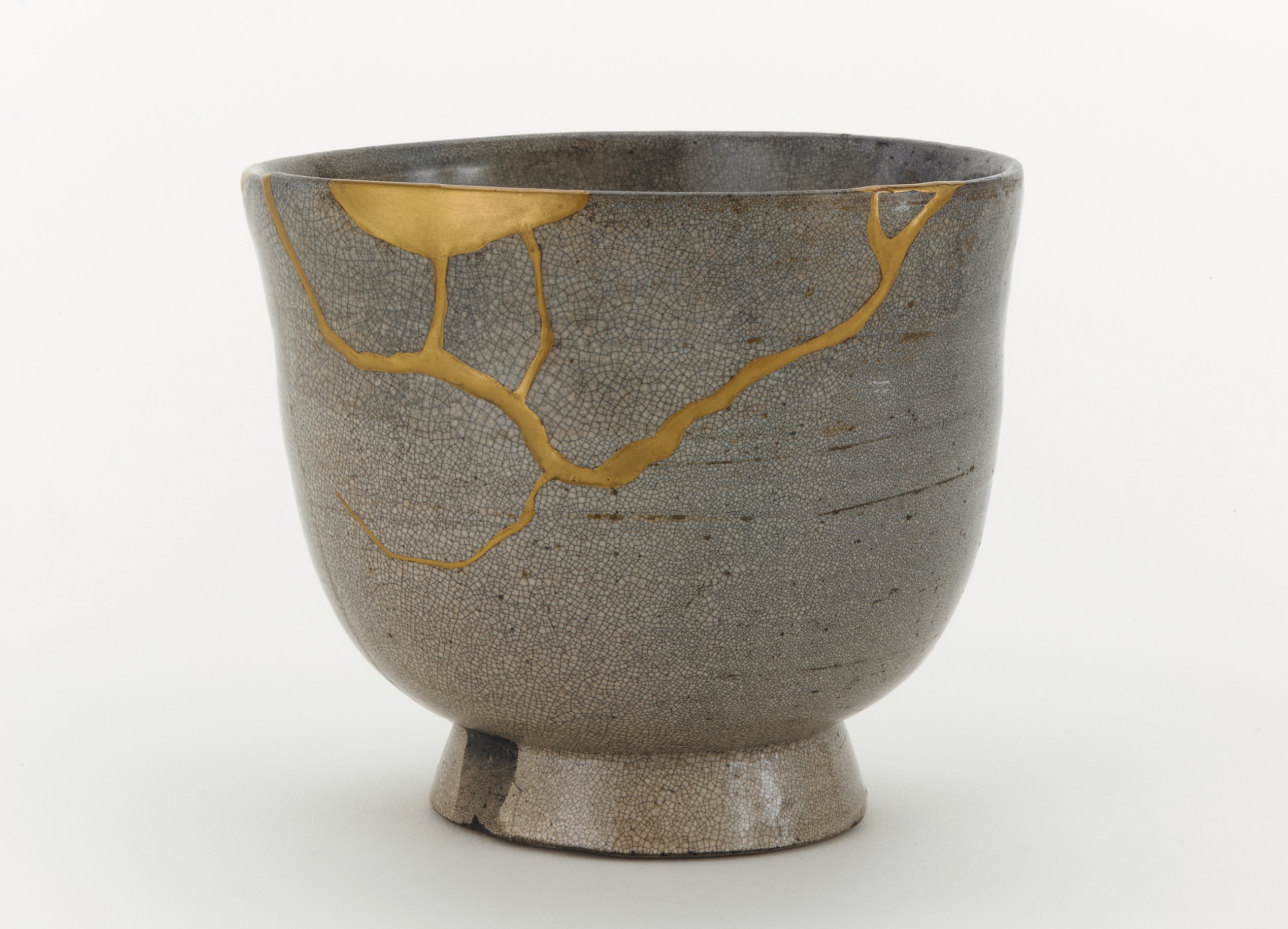
Kintsugi Tea Bowl

Tea bowl, Satsuma ware, White Satsuma type, Kagoshima prefecture, Japan, 17th century, Edo period, Stoneware with clear, crackled glaze, stained by ink; gold lacquer repairs, F1904.323.

Broken at some point in its past, this tea bowl in the Smithsonian’s Freer Gallery of Art was repaired with a Japanese technique known as kintsugi (golden joinery) or kintsuguroi (golden repairs). Unlike many restoration techniques that work to hide previous damage, this technique not only accepts but highlights the life of the object. The repairs were done using lacquer, a natural resin made from tree sap. Related to poison ivy, the sap is toxic when in liquid form, but once cured it is harmless. Often referred to as a natural plastic, lacquer results in a relatively water-resistant and durable repair, but requires a time-consuming, multi-step process.

Lacquer has been used to repair ceramics in Asia since prehistoric times but only started being decorated with gold several centuries ago in Japan. The exact origins of kintsugi are unknown, but it appears to have become more widespread in Japan when associated with the practice of tea in the late 16th century. Sprinkled with powdered gold, the lacquer repairs have become an integral part of the tea bowl’s appearance. 


arrow-up Back to top
Home
  • Facebook facebook
  • Instagram instagram
  • LinkedIn linkedin
  • YouTube youtube

  • Contact Us
  • Get Involved
  • Shop Online
  • Job Opportunities
  • Equal Opportunity
  • Inspector General
  • Records Requests
  • Accessibility
  • Host Your Event
  • Press Room
  • Privacy
  • Terms of Use