Skip to main content Skip to main navigation
heart-solid My Visit Donate
Home Smithsonian Institution IK development site for ODI
Press Enter to activate a submenu, down arrow to access the items and Escape to close the submenu.
    • Overview
    • Museums and Zoo
    • Entry and Guidelines
    • Museum Maps
    • Dine and Shop
    • Accessibility
    • Visiting with Kids
    • Group Visits
    • Overview
    • Exhibitions
    • Online Events
    • All Events
    • IMAX & Planetarium
    • Overview
    • Topics
    • Collections
    • Research Resources
    • Stories
    • Podcasts
    • Overview
    • For Caregivers
    • For Educators
    • For Students
    • For Academics
    • For Lifelong Learners
    • Overview
    • Become a Member
    • Renew Membership
    • Make a Gift
    • Volunteer
    • Overview
    • Our Organization
    • Our Leadership
    • Reports and Plans
    • Newsdesk
heart-solid My Visit Donate
  1. Home
  2. forward-slash
  3. Explore
  4. forward-slash
  5. Collections
  6. forward-slash
  7. Smithsonian Snapshot
  8. forward-slash
  9. An Artwork That Poses a Question

Explore

  • Overview
  • Topics
    • Art & Design
    • History & Culture
    • Science & Nature
    • Tech & Innovation
  • Collections
    • Open Access
    • Smithsonian Snapshot
    • Collection Spotlights
  • Research Resources
    • Libraries
    • Archives
  • Stories
  • Podcasts
Smithsonian Snapshot

An Artwork That Poses a Question
April 4, 2016
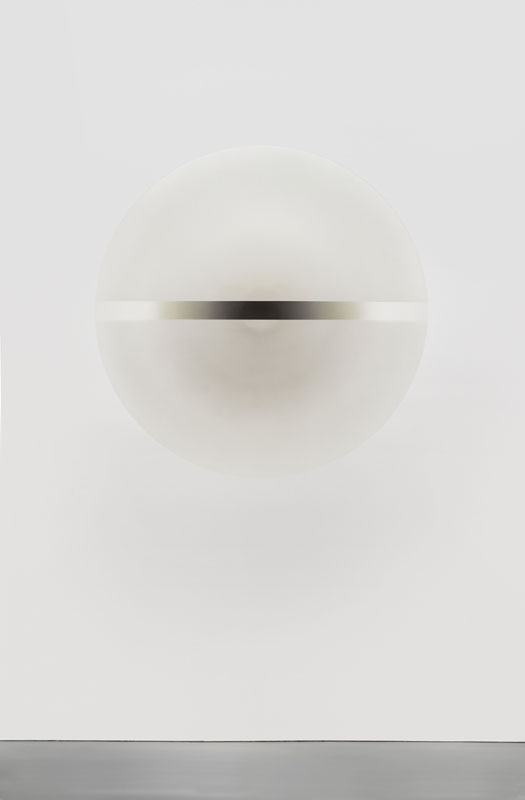
Robert Irwin, “Untitled,” 1969

Robert Irwin, “Untitled,” 1969, Acrylic paint on shaped acrylic, 53 1/4 in. (135.3 cm) diam., Hirshhorn Museum and Sculpture Garden, Washington, DC. Joseph H. Hirshhorn Purchase Fund, 1986, © 2016 Robert Irwin / Artists Rights Society (ARS), New York, Photo: Cathy Carver

An Artwork That Poses a Question

Where does a work of art end? With traditional easel painting, a frame marks the edge of the picture. Outside it, the artwork doesn’t exist. In his series of untitled acrylic discs, such as this one from 1969, California Light and Space artist Robert Irwin challenged that assumption. When the disc is lit, its perimeter dissolves into the space around it. The object, the shadows it casts and the walls of the gallery all become part of the experience.

For Irwin, the question isn’t merely academic. By breaking down the barriers between the artwork and the surrounding environment, he leads the viewer to consider all the variables that factor into the act of perception. When we look at this disc, we aren’t seeing only it; we are perceiving ourselves perceiving.

The work can be seen in “Robert Irwin: All the Rules Will Change,” which runs April 7–Sept. 5, 2016, at the Smithsonian’s Hirshhorn Museum and Sculpture Garden.

arrow-up Back to top
Home
  • Facebook facebook
  • Instagram instagram
  • LinkedIn linkedin
  • YouTube youtube

  • Contact Us
  • Get Involved
  • Shop Online
  • Job Opportunities
  • Equal Opportunity
  • Inspector General
  • Records Requests
  • Accessibility
  • Host Your Event
  • Press Room
  • Privacy
  • Terms of Use